
Learn Norwegian road markings for the theory test!
Combined lines
Are combined lines important for the theory test and the practical driving test?
Yes, combined lines are some of the most commonly used road markings, and it is important to follow the line that is closest to your own lane.
When you encounter combined lines on the road, it is important to follow the line that is closest to your own lane. If you accidentally end up in the oncoming lane, you must return to the correct side at the first safe opportunity. A double yellow warning line clearly marks a separation where the directions of travel may change. You will often see combinations of different types of lines, such as a warning line combined with a lane line, especially near bends. For example, the direction of travel that has just passed the bend may have a lane line, while the direction of travel approaching the bend will have a warning line.
Example of a yellow combined line: warning line and lane line
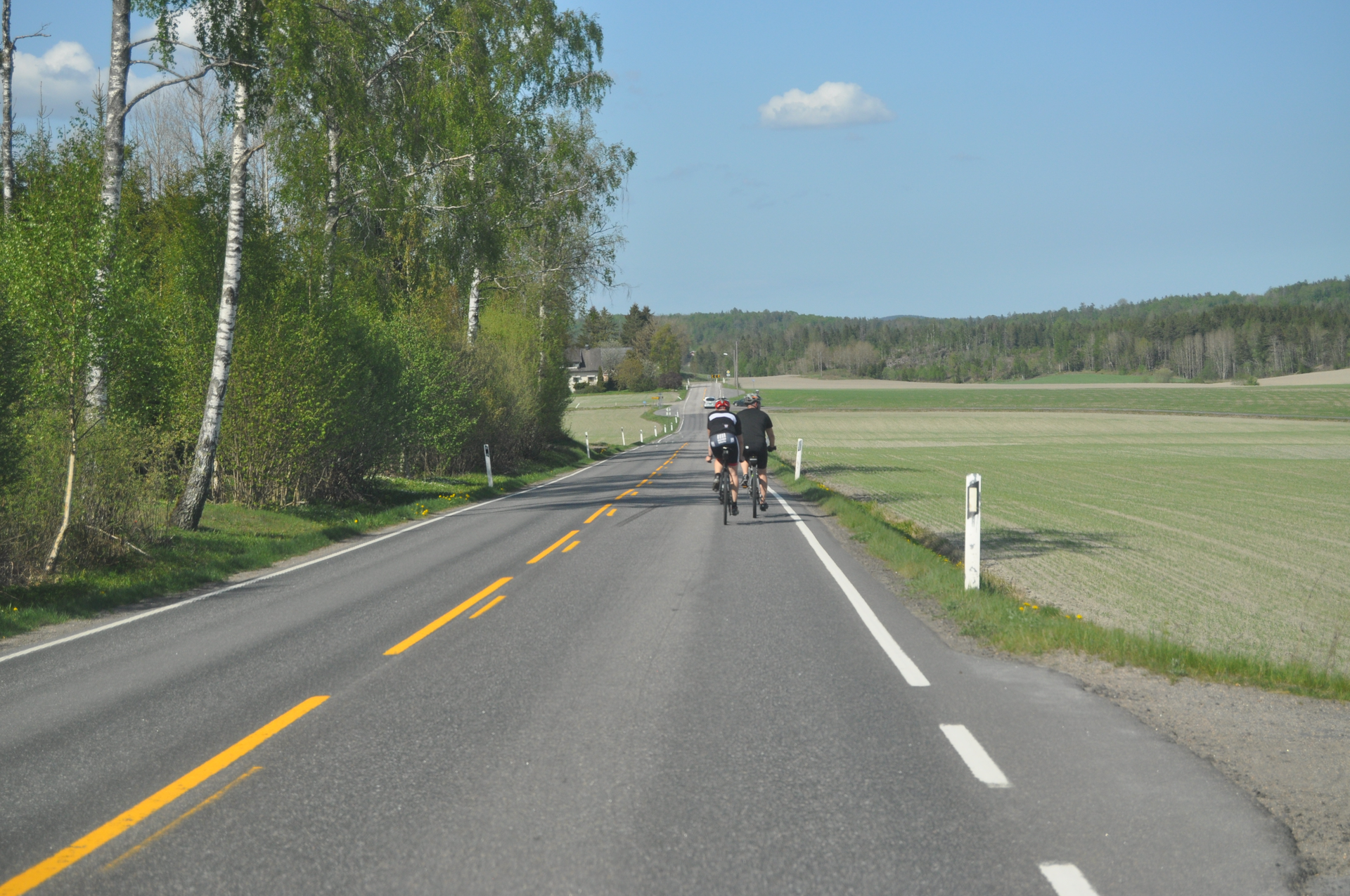
In the image you can see a combined line made up of a yellow warning line and a yellow lane line. Since the yellow lane line is closest to your own lane, this is the one you should follow.
Example of a white combined line: warning line and lane line
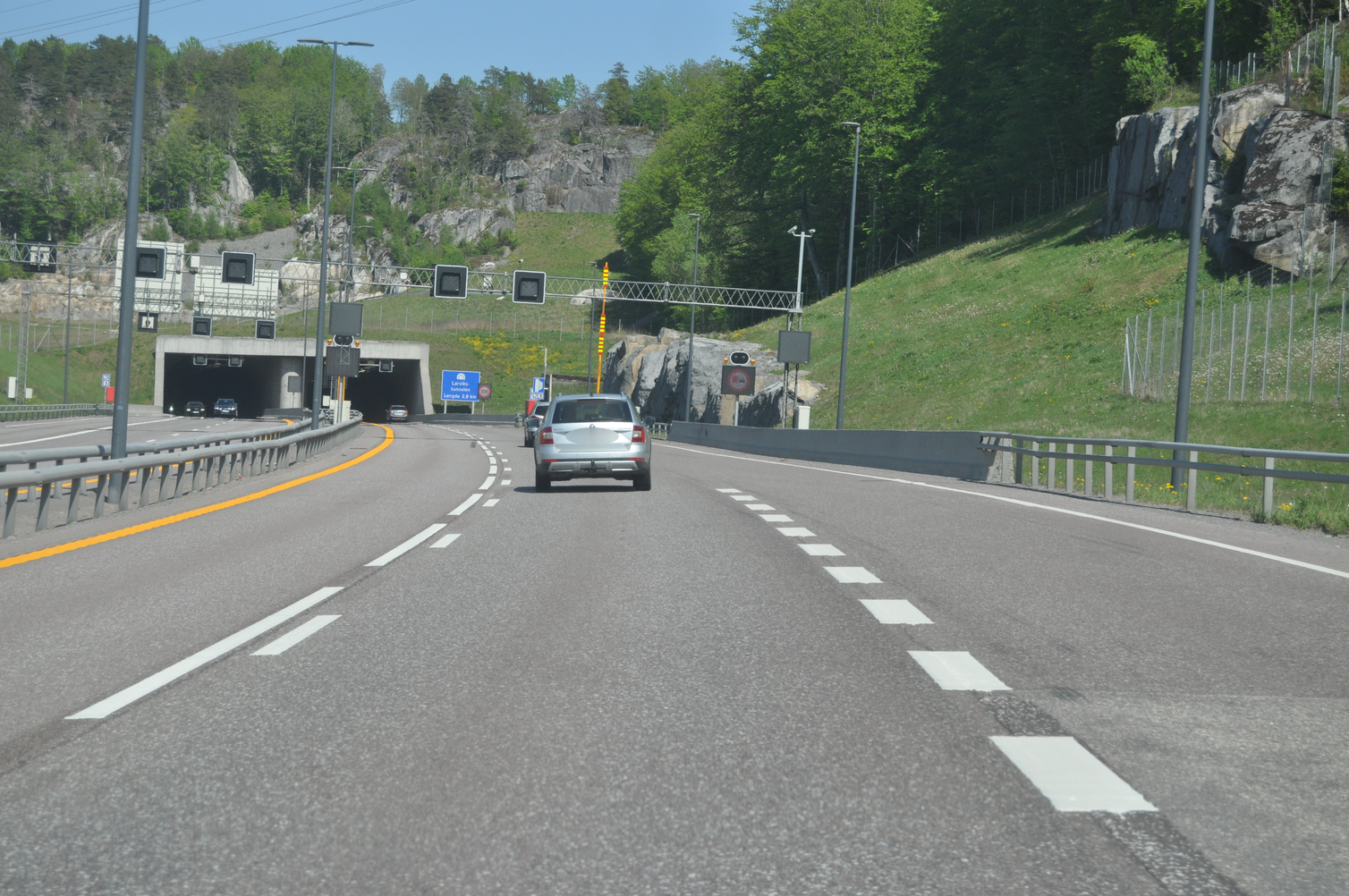
The image shows a combination of a white warning line and a white lane line. Follow the white lane line, as it is the closest to your own lane.
Example of a yellow combined line: lane line and warning line
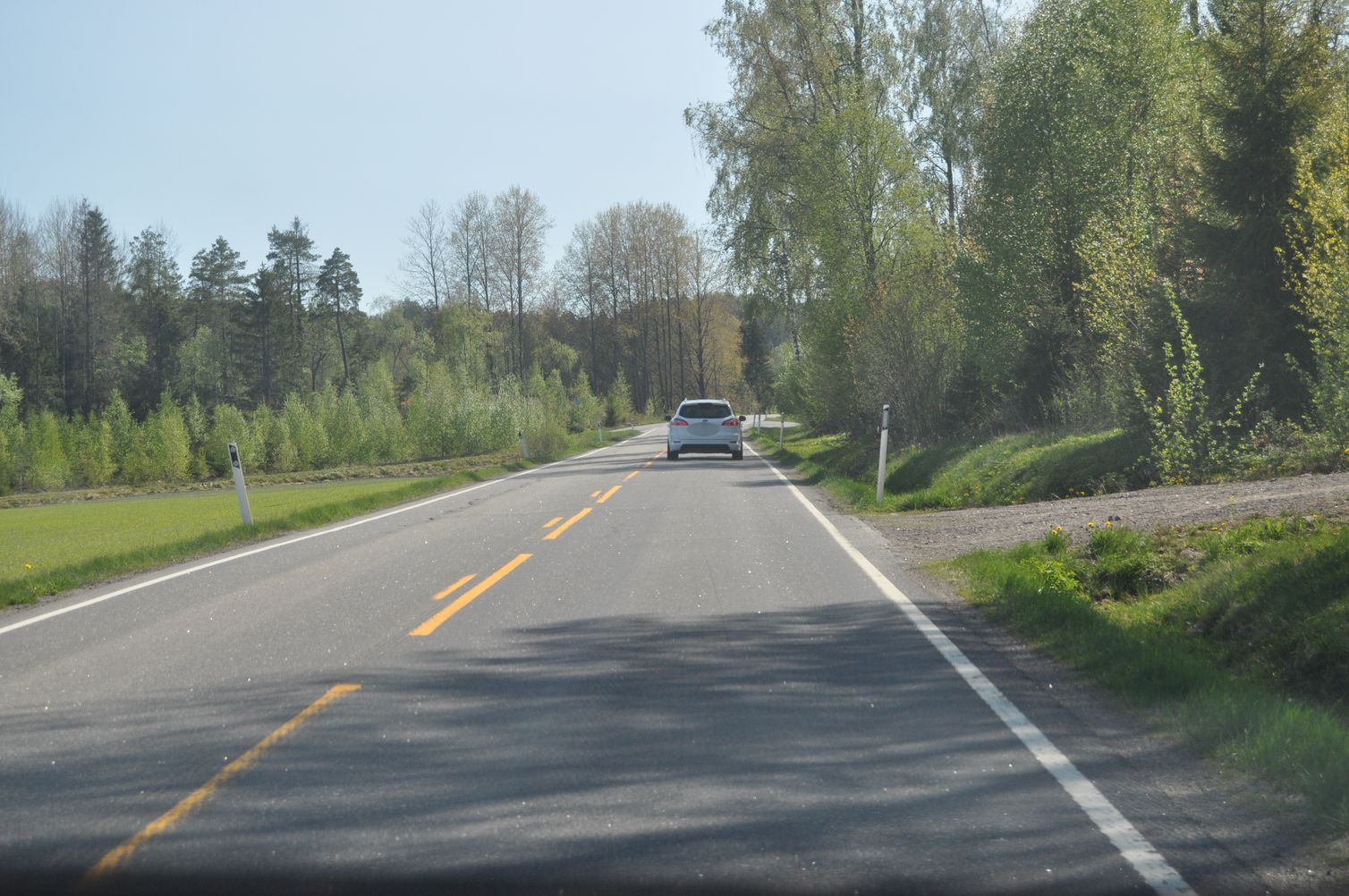
In the image you can see a combined line made up of a yellow lane line and a yellow warning line. Since the yellow warning line is closest to your own lane, this is the one you should follow. As a result, it is not recommended to make a normal overtaking maneuver on this stretch.
Example of a yellow combined line: double no-passing line
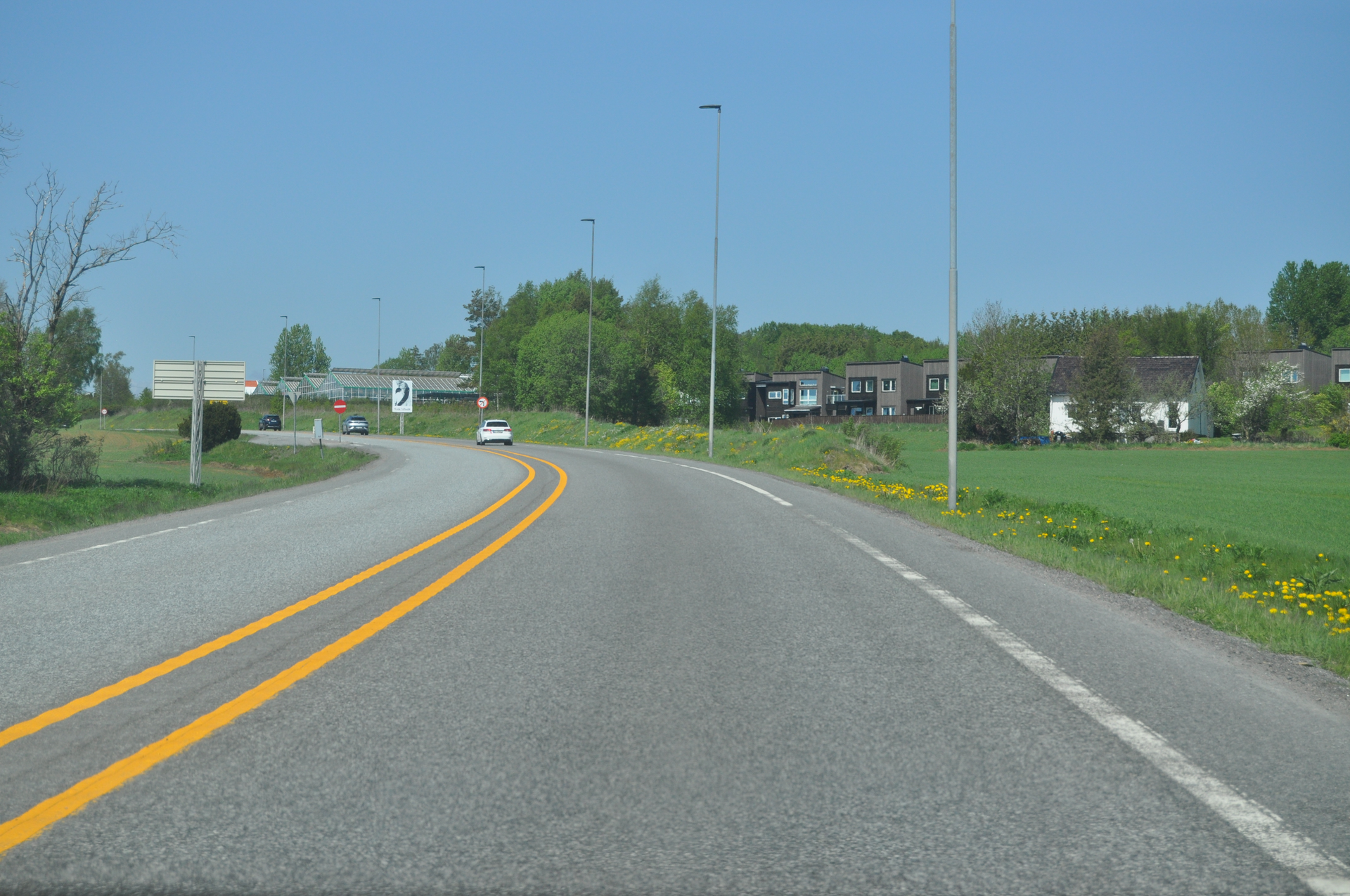
In the image you can see a combined line made up of two yellow no-passing lines. You are not allowed to drive on, across, or to the left of these lines.