

Learn Norwegian road markings for the theory test!
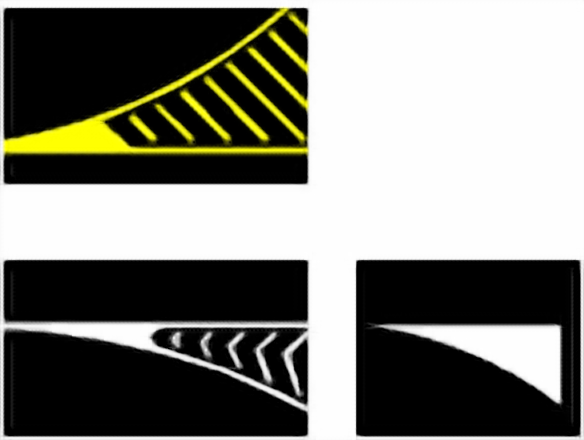
Restricted area marking
Are hatched areas (restricted area markings) important for the theory test and the practical driving test?
Yes, hatched areas are important. They are marked with solid lines and indicate places where driving or crossing is prohibited. Hatched areas are used to manage traffic and improve safety, especially around roundabouts and motorway on-ramps.
A hatched area is an important traffic safety measure, designed to control and direct vehicle movements on roads and motorways. The area is clearly marked with continuous solid lines, where the spacing between the lines does not exceed 100 cm. The purpose of these markings is to clearly signal that driving or crossing is strictly prohibited, and that violations can lead to serious consequences, both for traffic safety and as legal consequences for the driver.
To increase the visibility of and attention to hatched areas, milled grooves may also be added. This measure is particularly useful in areas with heavy traffic or in situations where visual markings can easily be overlooked, such as in poor weather or in the dark.
Hatched areas are usually installed at strategic points along the road to protect critical entry points, dangerous intersections, or specific traffic flow needs such as those around roundabouts and motorway on-ramps. These areas play a critical role in preventing accidents and improving overall traffic safety by creating clear and not-to-be-crossed boundaries for vehicle movements.
Example of a hatched area before a roundabout
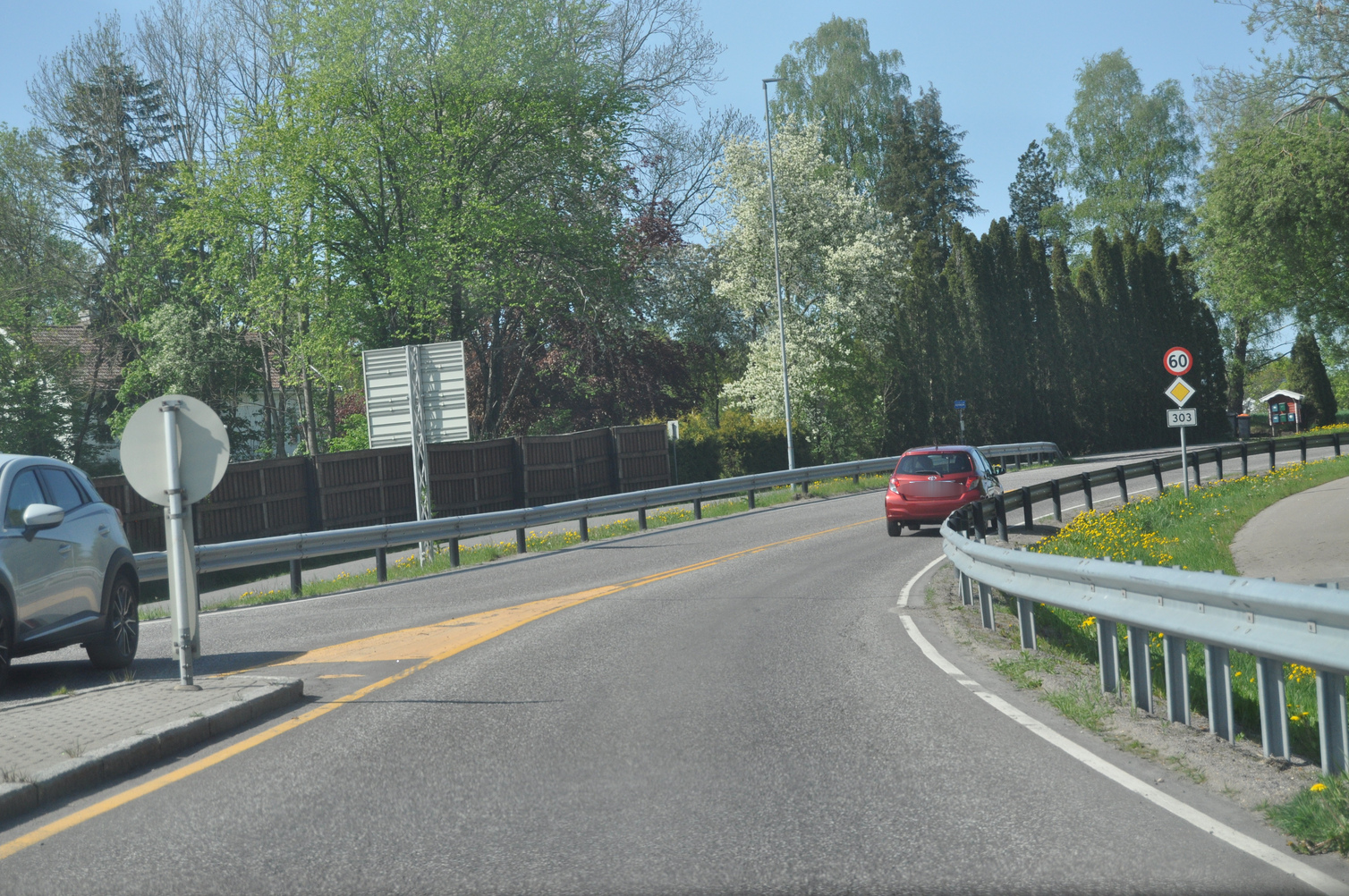
In this picture, a hatched area is shown placed just before a roundabout. This helps direct the traffic flow and prevents vehicles from going the wrong way.
Example of a hatched area on a motorway
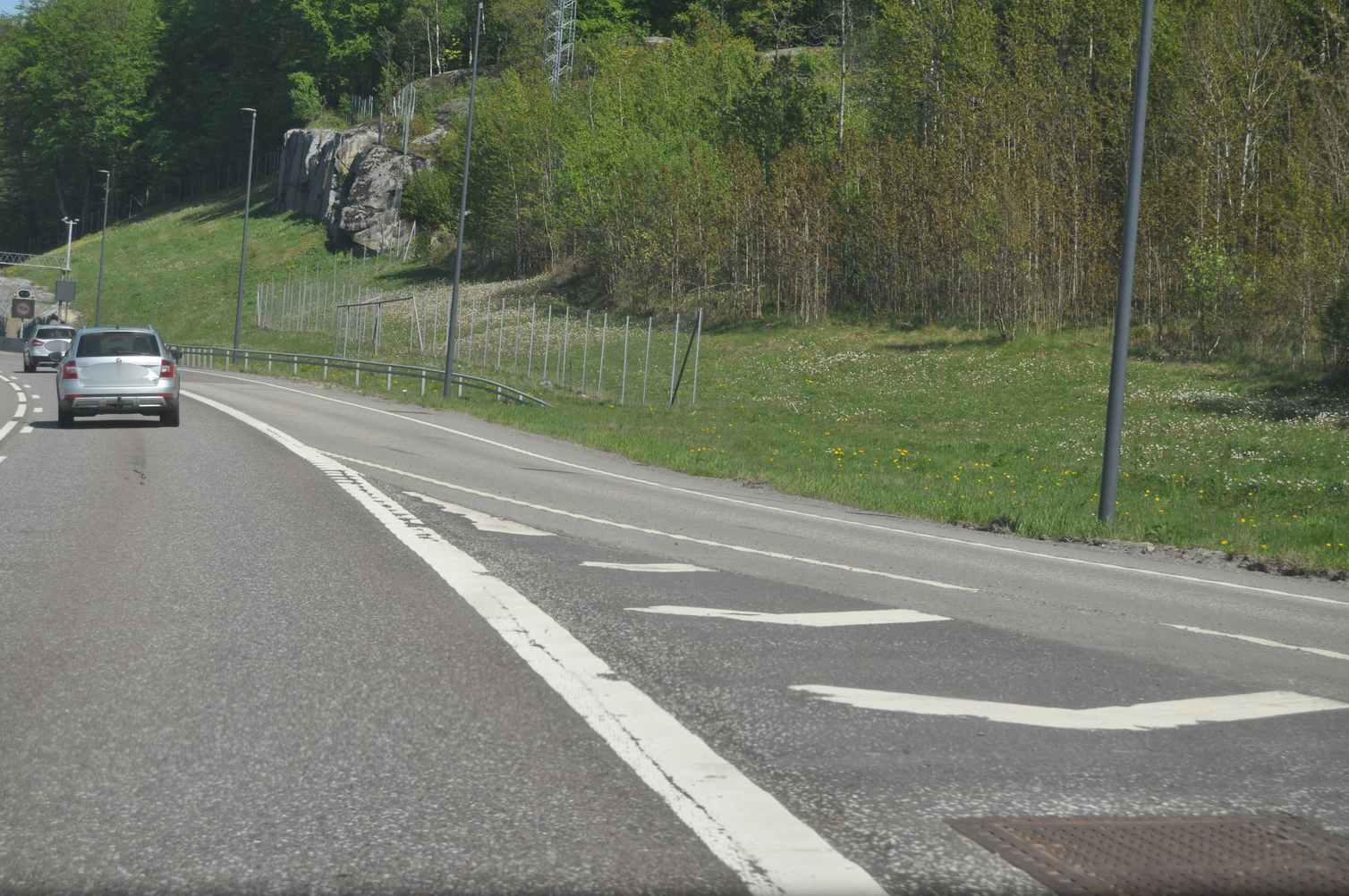
In this picture, a hatched area is shown on a motorway. The area acts as a safety buffer to prevent unauthorized access to specific parts of the road, thereby ensuring the safety of all road users.