

Warning signs
What do warning signs look like?
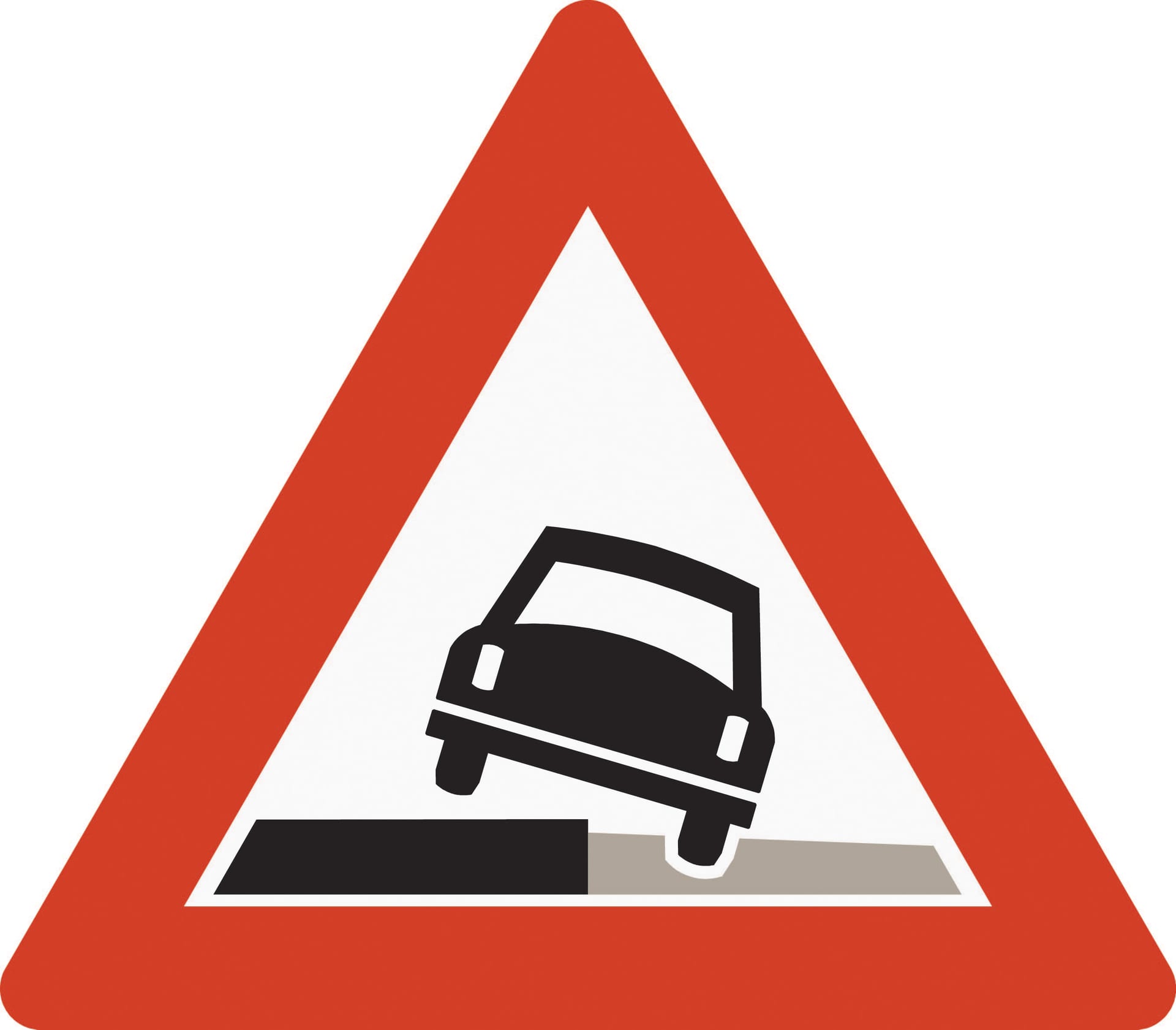
Warns of soft road shoulder
Warns of soft road shoulder
Is the dangerous shoulder warning sign important for the class B theory test and the practical driving test?
Yes. On the class B theory test you may be asked about the meaning of the dangerous shoulder warning sign and when it is used. If you encounter the sign during the practical driving test, you must show that you recognize it, slow down, and position yourself safely.
What does the dangerous shoulder warning sign mean?
The dangerous shoulder warning sign warns that the road shoulder next to the lane does not have sufficient load-bearing capacity. If you drive onto the shoulder, the car can sink, lose steering, or tip over.
When do you encounter the dangerous shoulder warning sign?
You often encounter the dangerous shoulder warning sign on:
- Narrow rural roads – where the shoulder consists of gravel or dirt.
- Roadworks – temporarily when the edge has been dug out or is not yet finished.
- Rural road sections – next to ditches, streams, or soft ground.
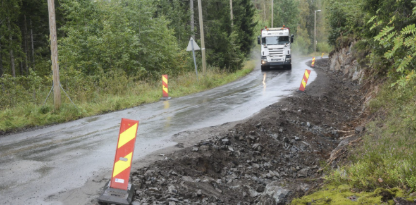
In the picture you see the dangerous shoulder warning sign placed before roadside work. You must slow down and keep a safe distance from the edge to avoid running off the road.
What happens if you drive onto the shoulder?
If you drive onto the shoulder, the tires can sink into soft ground, and the car can lose steering or roll over. This is dangerous for you and other road users.
Why is the dangerous shoulder warning sign important?
The dangerous shoulder warning sign gives you time to prepare, slow down, and keep the car at a safe distance from the edge. It contributes to better traffic safety and reduces the risk of accidents.
Frequently asked questions (FAQ) about the dangerous shoulder warning sign
- Does the dangerous shoulder warning sign apply to bicycles? – Yes, bicycles can also lose grip or get stuck on an unstable shoulder.
- How far before the hazard does the dangerous shoulder warning sign appear? – The sign is placed so that you have time to slow down, normally 40–200 meters depending on the speed limit.