

Warning signs
What do warning signs look like?
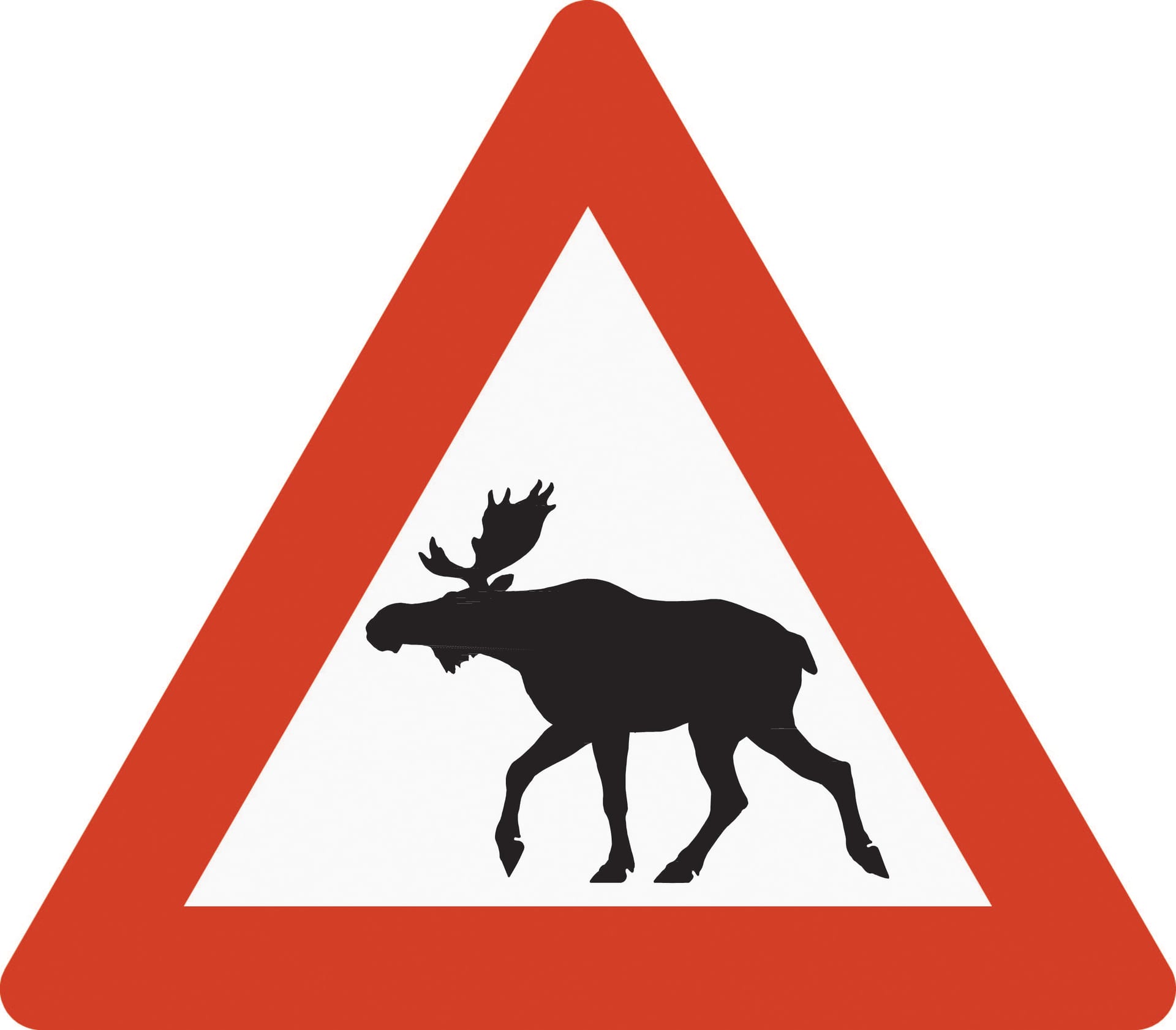
Risk of elk
Risk of elk
Is the elk warning sign important for the theory test and the practical driving test?
The elk warning sign is very important both on the theory test and during the practical driving test. You must be able to recognize the sign and know what to do when you see it.
What is the elk warning sign?
The elk warning sign is a triangular warning sign with a red border and a black symbol of an elk on a white background. It warns that elk may cross the road in the area.
Where do you encounter the elk warning sign?
You often find the elk warning sign at:
- Rural areas – near forests and wilderness areas.
- Elk migration routes – places elk pass through during autumn and spring migration.
- National and wilderness roads – especially near lakes and rivers.
How do you react when you see the elk warning sign?
When you see the elk warning sign, keep a safe distance from the car in front and actively scan the roadside. Be ready to brake or stop if an elk suddenly steps onto the road.
Things to remember when encountering an elk
Elk are large and heavy, and a collision can have serious consequences. Use high beams for better visibility, but turn off flashing lights if you stop. Do not try to scare the elk – it can react unpredictably.
Frequently asked questions (FAQ) about the elk warning sign
- Does the sign apply at night? – Yes, the elk warning sign applies around the clock.
- Are supplementary signs allowed? – Yes, you may see a supplementary sign indicating distance or extent of the hazard zone.