

Warning signs
What do warning signs look like?
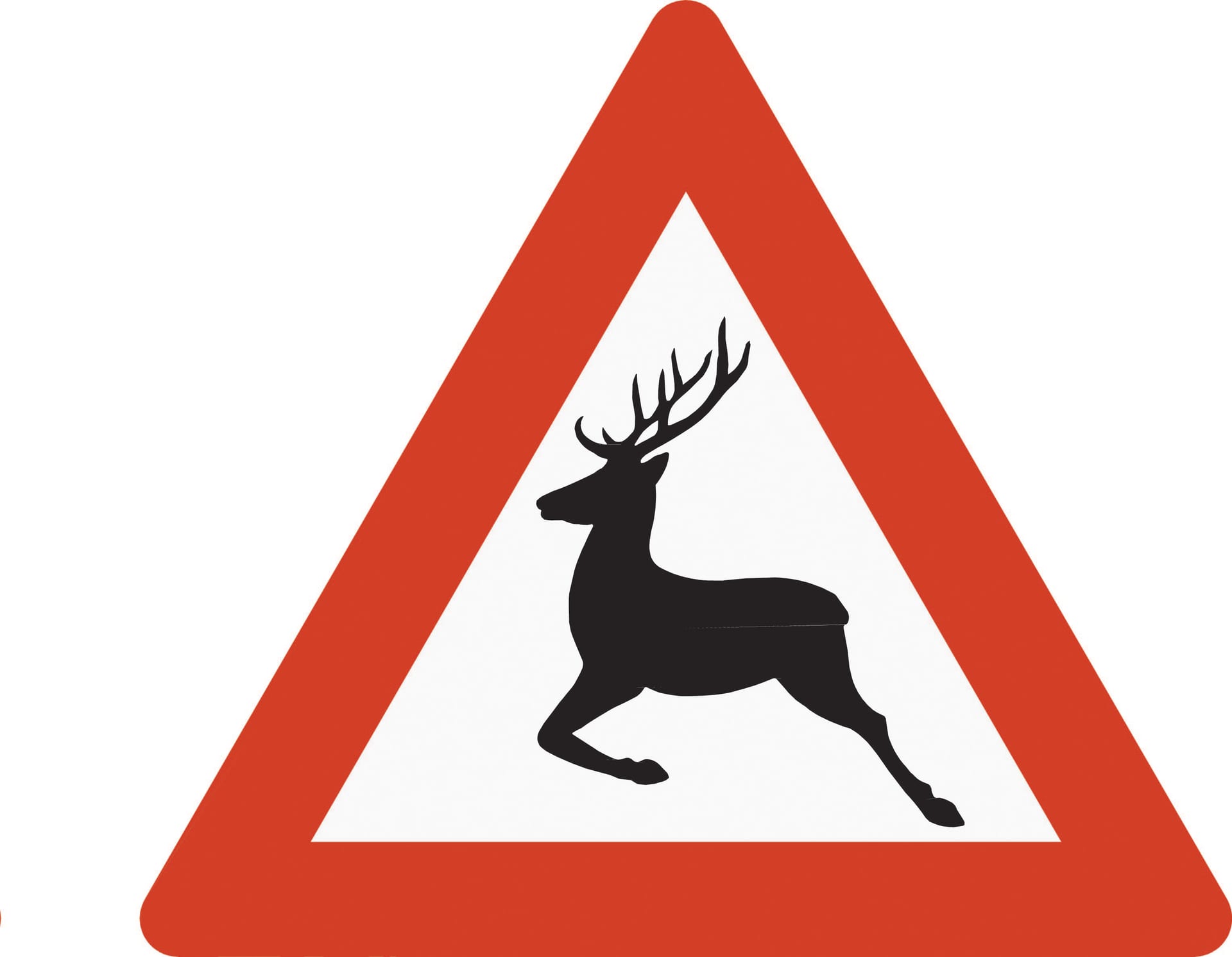
Risk of deer
The deer warning sign
Is the deer warning sign important for the theory test and the practical driving test?
Yes. On the theory test you may be asked what the deer warning sign means and where it is used. During the practical driving test you must show that you recognize the deer warning sign and that you take it into account.
What is the deer warning sign?
The deer warning sign is a standard sign that warns that you may encounter deer on or near the road. The sign is triangular with a red border, a white background, and a black deer silhouette.
Where do you encounter the deer warning sign?
You often see the deer warning sign at:
- Rural forest roads – in areas with dense forest and good grazing areas.
- Early morning and evening – deer are most active in low light.
What should you do when you see the deer warning sign?
Increase your distance to the car in front and be ready to brake. Use high beams at night to spot animals early, but switch them off when meeting traffic so you do not dazzle other drivers.
Why is the deer warning sign important?
The deer warning sign prevents serious accidents by warning about high risk of deer. Following the sign improves safety for both animals and people.
Frequently asked questions (FAQ) about the deer warning sign
- Does the sign apply around the clock? – Yes, unless it is covered during periods of low animal activity.
- What is the difference between supplementary signs for distance and extent? – The distance sign shows meters to the hazard location; extent shows the length of the hazard zone.