

Warning signs
What do warning signs look like?
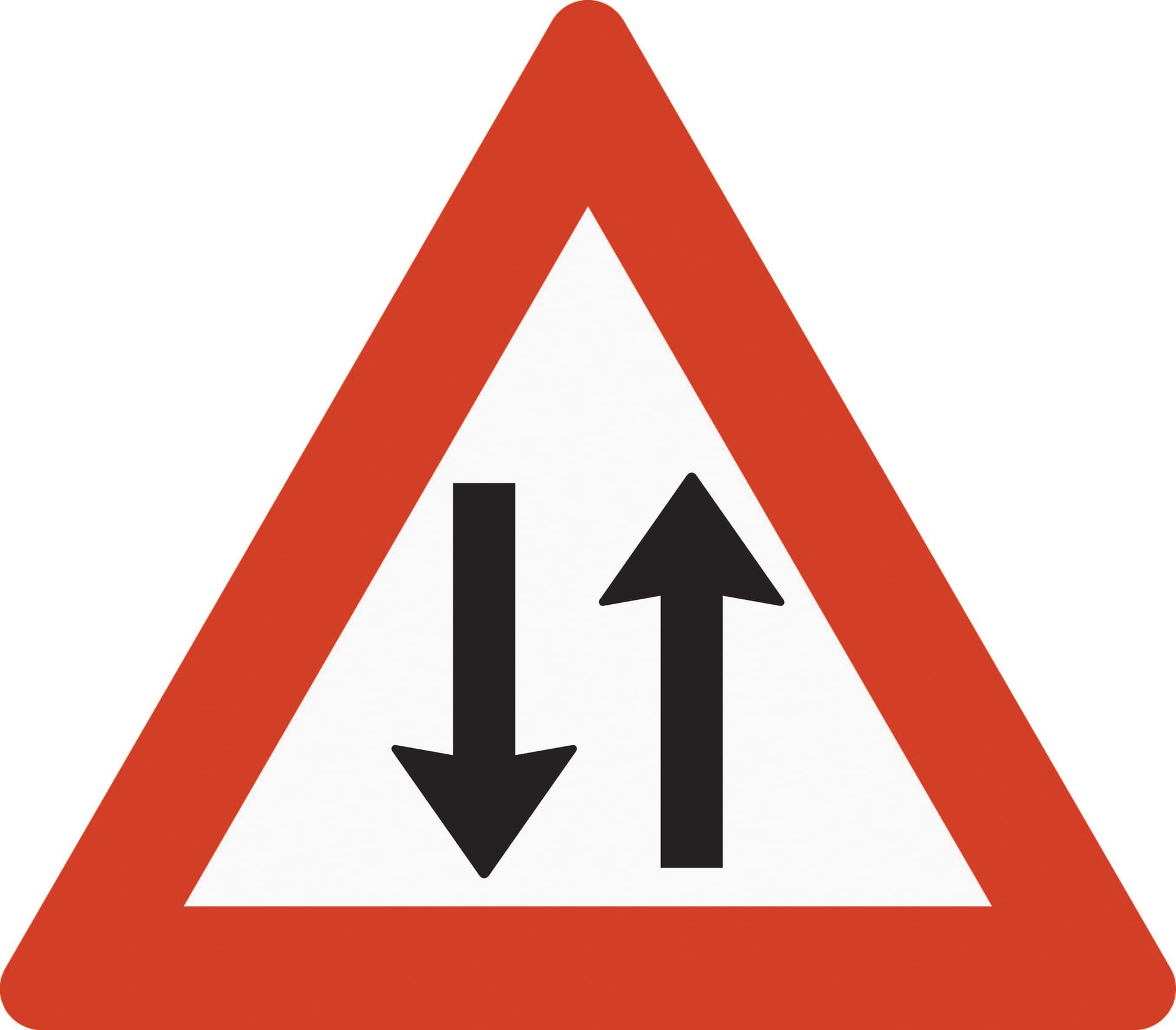
Risk of oncoming traffic
Risk of oncoming traffic
Is the oncoming traffic warning sign important for the theory test and the practical driving test?
The oncoming traffic warning sign is part of the syllabus both for the theory test and the practical driving test. On the theory test you may be asked when and where the sign is used. During the practical driving test you must show that you recognize the sign and adjust your driving accordingly.
What does the oncoming traffic warning sign mean?
The oncoming traffic warning sign warns that the next stretch of road has traffic in both directions. When you see this sign, you must be prepared for oncoming vehicles.
Where do you find the oncoming traffic warning sign?
This sign is often used at:
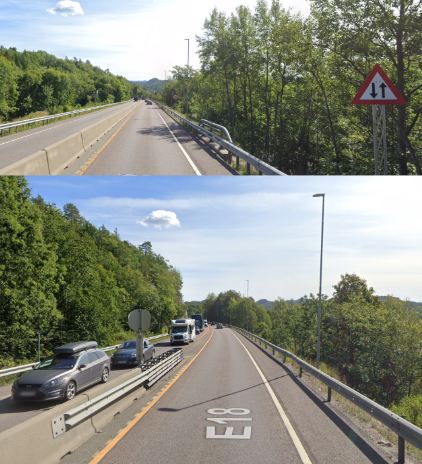
- Transitions from a road with a physical median – before the end of a median or center barrier.
In the picture you see the oncoming traffic warning sign placed on a road where the median ends and two-way traffic begins.
What happens if you ignore the oncoming traffic warning sign?
Without noticing the sign you can be surprised by oncoming cars, which can lead to head-on collisions or dangerous evasive maneuvers. Always follow the warning for safe traffic.
Why is the oncoming traffic warning sign important?
The sign makes you aware that you are now sharing the road with cars from both directions. It improves safety by ensuring you keep the correct side of the road, adjust your speed, and avoid dangerous overtaking.
Frequently asked questions (FAQ) about the oncoming traffic warning sign
- Does the sign apply to cyclists? – Yes, cyclists must also be prepared for two-way traffic.
- Can it be combined with a supplementary sign? – Yes, often with supplementary sign 802 "Distance" to show the exact location.