

Warning signs
What do warning signs look like?
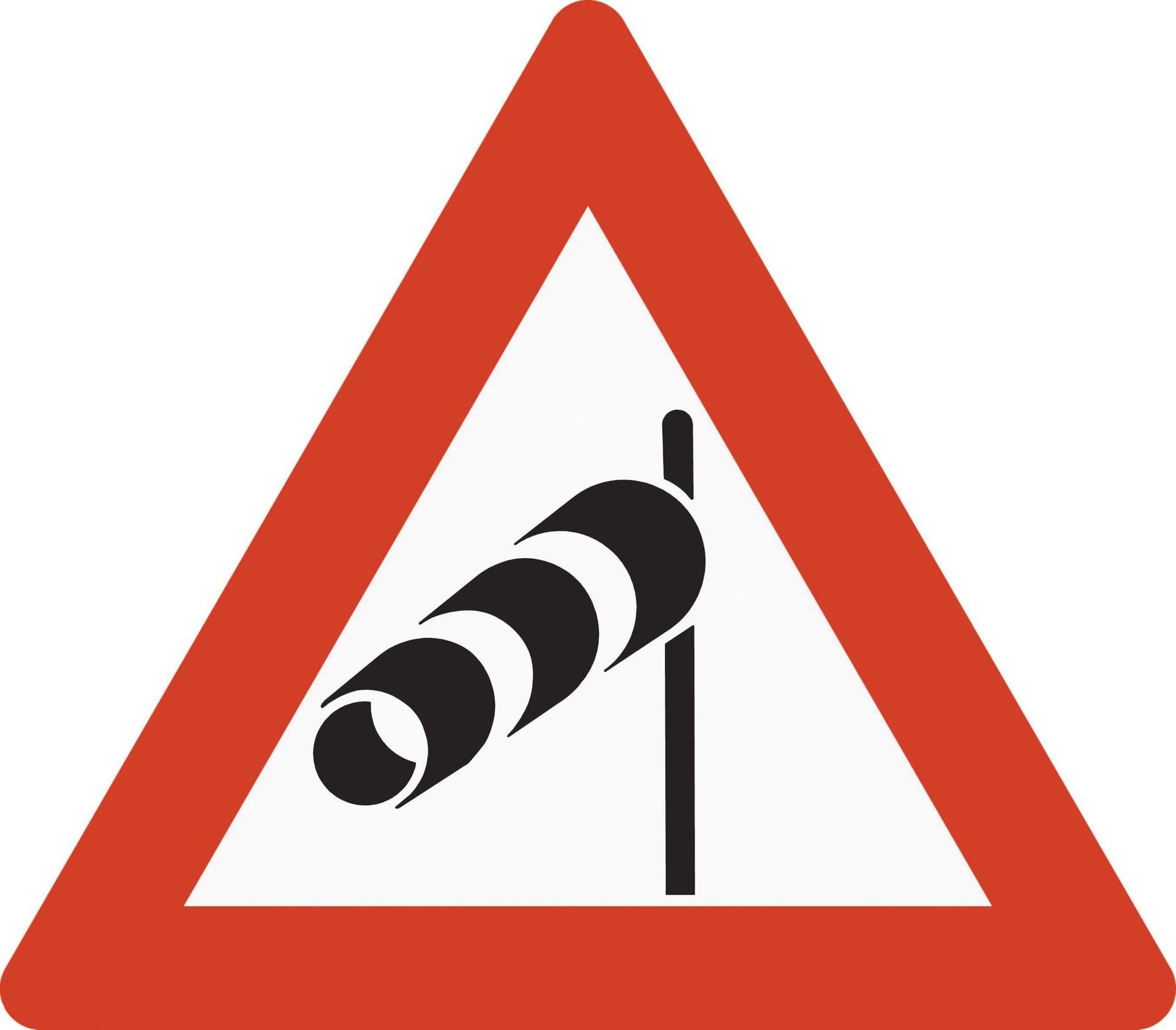
Risk of crosswind
Risk of crosswind
Is the crosswind warning sign important for the theory test and the practical driving test?
The crosswind warning sign is part of the syllabus, so it is important on the theory test. On the practical driving test it is unlikely that you will encounter this sign, since it is rarely used in practice. Even so, you should know what the sign means if it appears.
What does the crosswind warning sign mean?
The crosswind warning sign warns about strong wind from the side that can pull the car off course. The sign is placed where wind can make it hard to keep the vehicle stable, for example with high vehicles or with a trailer.
Where do you find the crosswind warning sign?
This sign is often used on:
- Bridges – especially coastal and suspension bridges where the wind gets a hold.
- Open plains – without wind shelter from trees or mountains.
- Mountain passes – where the weather can change quickly.
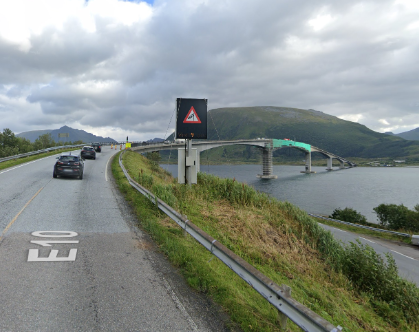
The picture shows the crosswind warning sign placed before a bridge. You must be prepared for gusts from the side and hold the steering wheel firmly.
What happens if you ignore the crosswind warning sign?
If you do not adjust your speed and drive with full focus, gusts can push the car out of the lane. This increases the risk of running off the road or head-on collisions, especially with high vehicles or a trailer.
Why is the crosswind warning sign important?
The crosswind warning sign contributes to safe traffic by giving you time to slow down and maintain control. By respecting the sign you reduce the risk of accidents and loss of control on exposed stretches.
Frequently asked questions (FAQ) about the crosswind warning sign
- Does the crosswind warning sign apply to all vehicles? – Yes, all drivers must adapt to wind conditions, but high vehicles and trailers are most exposed.
- Do I always have to reduce speed when I see the crosswind warning sign? – You should slow down and keep a good margin to the edge line and center line to handle gusts.
- What is a windsock? – A windsock is a marker that shows local wind direction and strength. It is placed where the crosswind warning sign is located.