
Warning signs
What do warning signs look like?
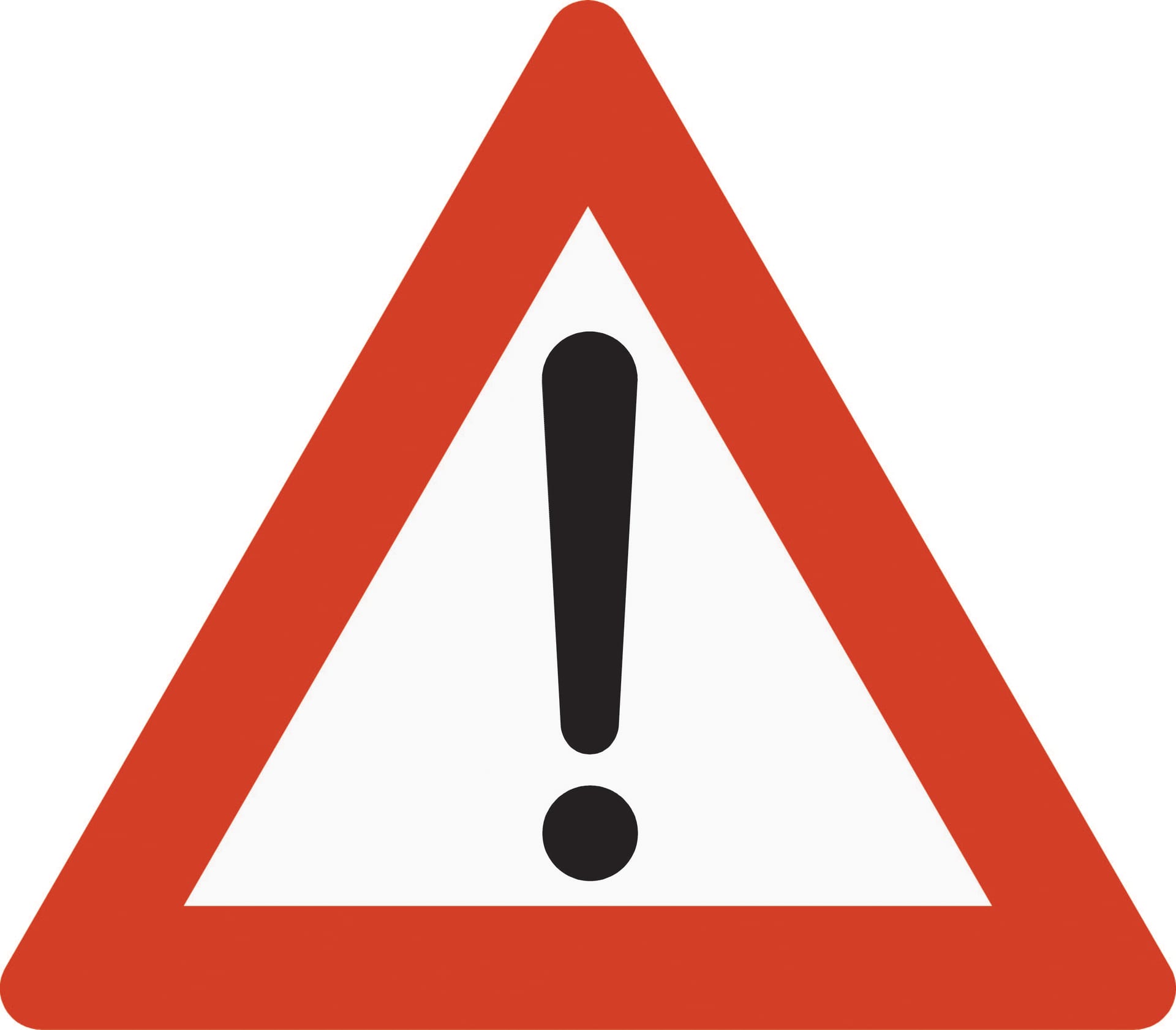
Other hazard
Other hazard
Is the other danger warning sign important for the theory test and the practical driving test?
This sign is important on the theory test because you must know that it warns about general hazards that do not have their own warning sign. During the practical driving test it is less used, so it is not one of the most central signs to remember, but if you encounter it you must slow down, look for supplementary signs, and adjust your driving to the indicated hazard.
What does the other danger warning sign mean?
The other danger warning sign is a general warning sign that is used when the hazard cannot be warned with any other standard warning sign. The exclamation mark tells you to watch for an unknown hazard, and the supplementary sign gives detailed information.
When do you encounter the other danger warning sign?
You will often see the sign together with supplementary signs such as:
- Hilltop – blind ascent
- Flood – risk of water on the road
- Gravel road – loose gravel reduces grip
- Deep ruts – large holes or ruts
- Event – cycle race, run, or market
- Farmyard – animals and tractor traffic on the road
What happens if you ignore the other danger warning sign?
If you ignore the warning, you risk meeting dangerous road conditions unexpectedly. This can lead to loss of control, running off the road, or a collision.
Frequently asked questions (FAQ) about the other danger warning sign
- Why must there always be a supplementary sign? Without a supplementary sign, you will not know what kind of hazard is ahead.
- Does the sign apply to cyclists? Yes, all road users must adapt to the hazard, even though the signs are primarily aimed at motor vehicles.