

Information signs
What do information signs look like?
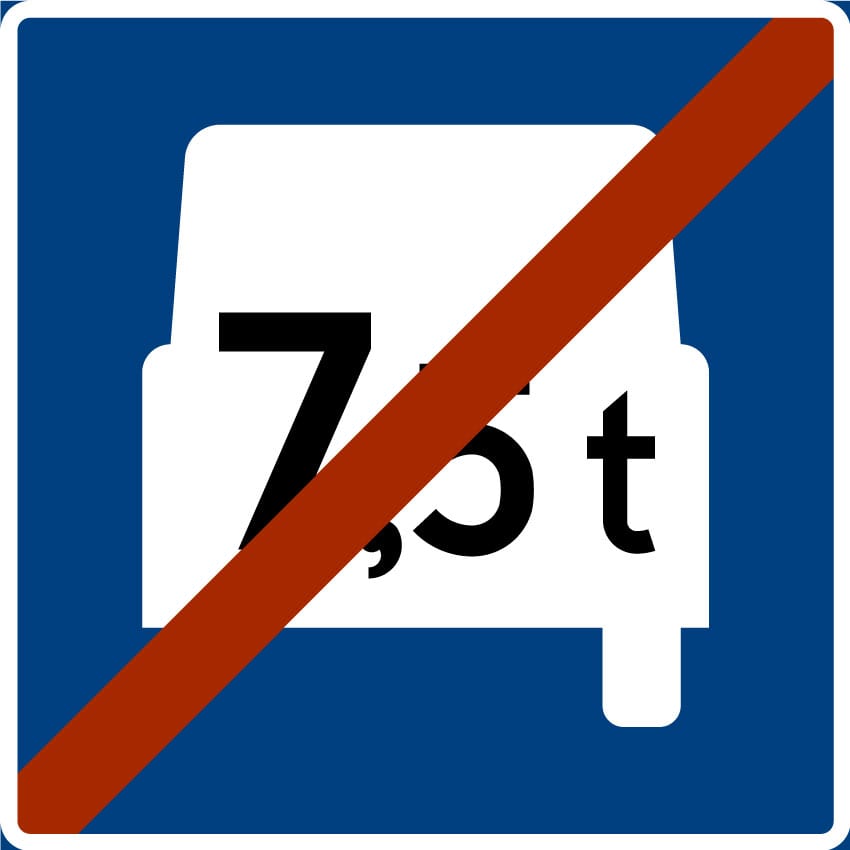
End of heavy-vehicle lane
[object Object]
Is the end-of-heavy-vehicle-lane sign important for the class B theory test and the driving test?
Yes, the end-of-heavy-vehicle-lane sign is one of the information signs you must know for the class B theory test. During the driving test you must show that you know the meaning of the end-of-heavy-vehicle-lane sign and adapt to the merging of heavy traffic with other vehicles.
What is the end-of-heavy-vehicle-lane sign?
The end-of-heavy-vehicle-lane sign is a square sign with a blue background, a white border, and a symbol of a heavy-vehicle lane with a diagonal stripe. The diagonal stripe means that the lane for heavy vehicles ends.
When do you encounter the end-of-heavy-vehicle-lane sign?
The end-of-heavy-vehicle-lane sign appears:
- On motorways with climbing lanes for heavy vehicles on hills.
- On express roads where the heavy-vehicle lane ends.
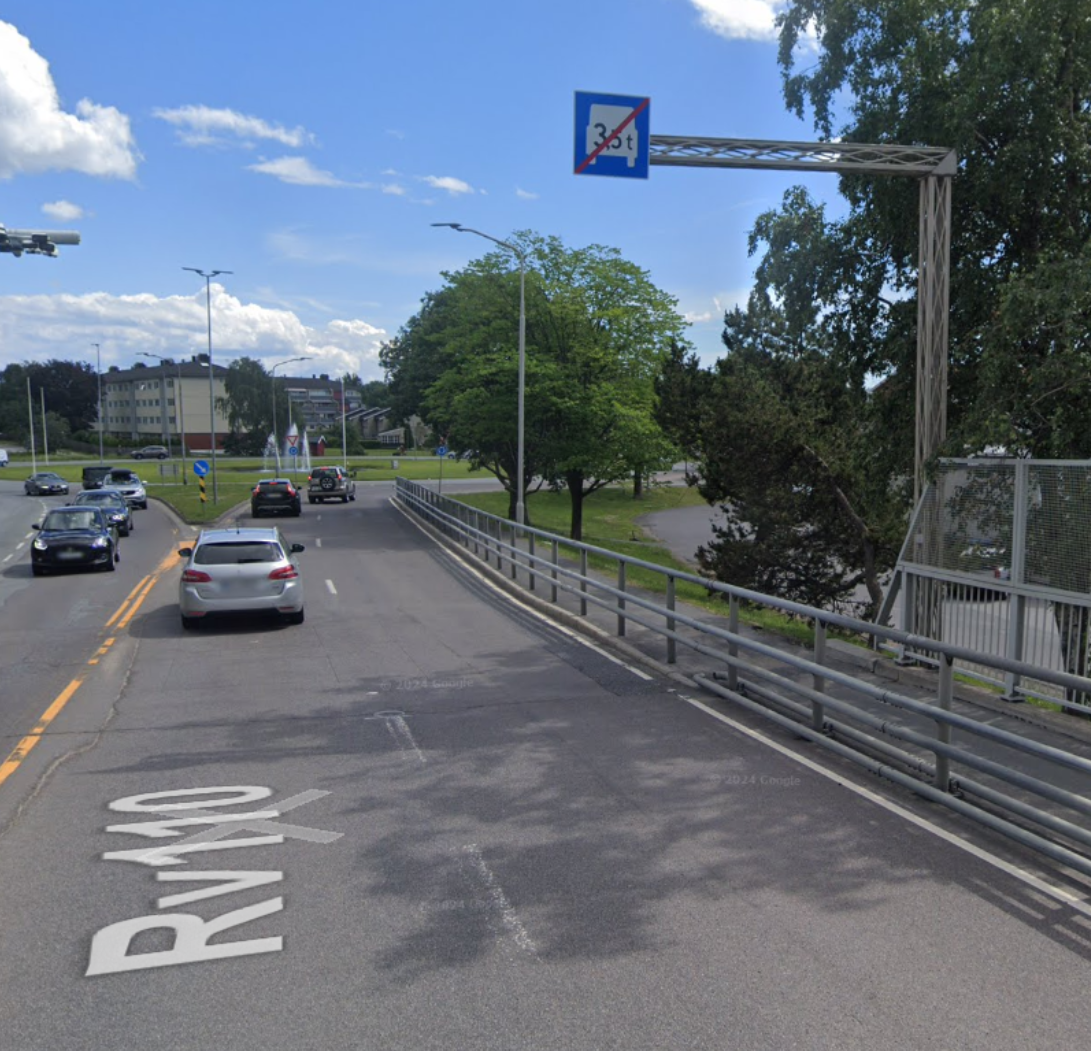
- When the lane is not used for anything else after the heavy-vehicle lane sign.
In the example you can see the end-of-heavy-vehicle-lane sign
What happens if you overlook the end-of-heavy-vehicle-lane sign?
If heavy vehicles do not leave the lane when the end-of-heavy-vehicle-lane sign is in place, it can lead to abrupt and dangerous merging. Car drivers must be prepared for trucks and buses to merge into traffic.
Why is the end-of-heavy-vehicle-lane sign important for traffic safety?
The end-of-heavy-vehicle-lane sign provides predictability and time for a safe lane merge. Good signage reduces the risk of accidents and contributes to better flow on the road.
Frequently asked questions (FAQ) about the end-of-heavy-vehicle-lane sign
- Does the end-of-heavy-vehicle-lane sign apply to passenger cars? – No, it indicates the end of a lane reserved only for heavy vehicles. Passenger cars could not use the lane until after the sign.