

Information signs
What do information signs look like?
Information signs are square, with a blue background, white border and a white symbol with text. There are exceptions to this rule of thumb. Information signs provide information about special rules — including prohibitions and requirements that apply on a particular stretch of road or at a specific location.
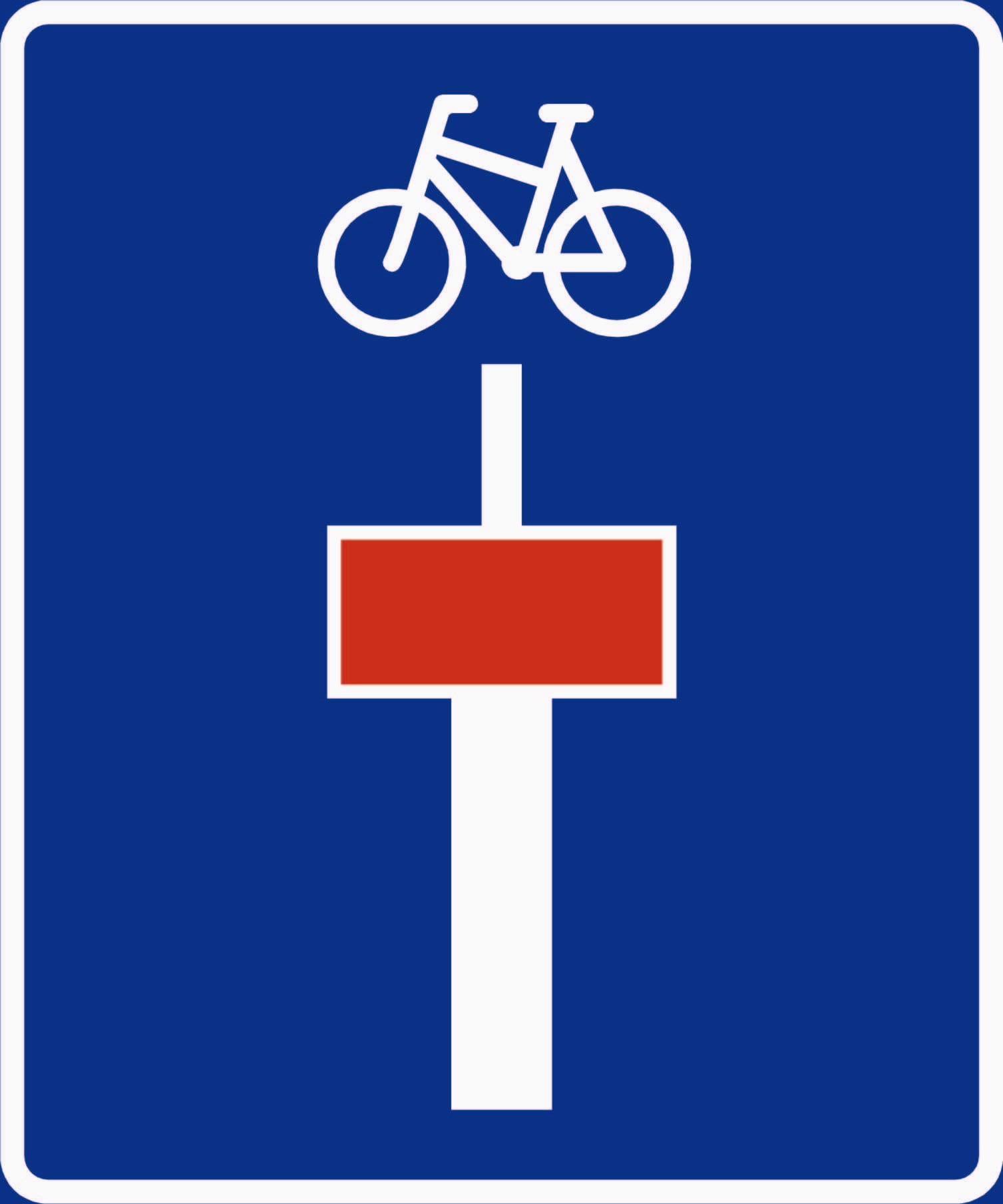
Dead end (open to pedestrians and cyclists)
The sign shows that the road is closed to motor traffic but open to pedestrians and cyclists. The bicycle symbol on signs 527.3 and 527.4 may be replaced with a pedestrian symbol if the onward road is intended only for pedestrians.
[object Object]
Is the "Dead end - except cycles" sign important for the theory test and the driving test?
Yes. The "Dead end - except cycles" sign is important both for the theory test and during the driving test. You must be able to recognize the sign and understand that the road is closed to cars, while cyclists and pedestrians can continue.
What does the "Dead end - except cycles" sign mean?
The sign indicates that the road is a dead end for motorized traffic, but that cyclists and pedestrians can continue.
Where do you encounter the "Dead end - except cycles" sign?
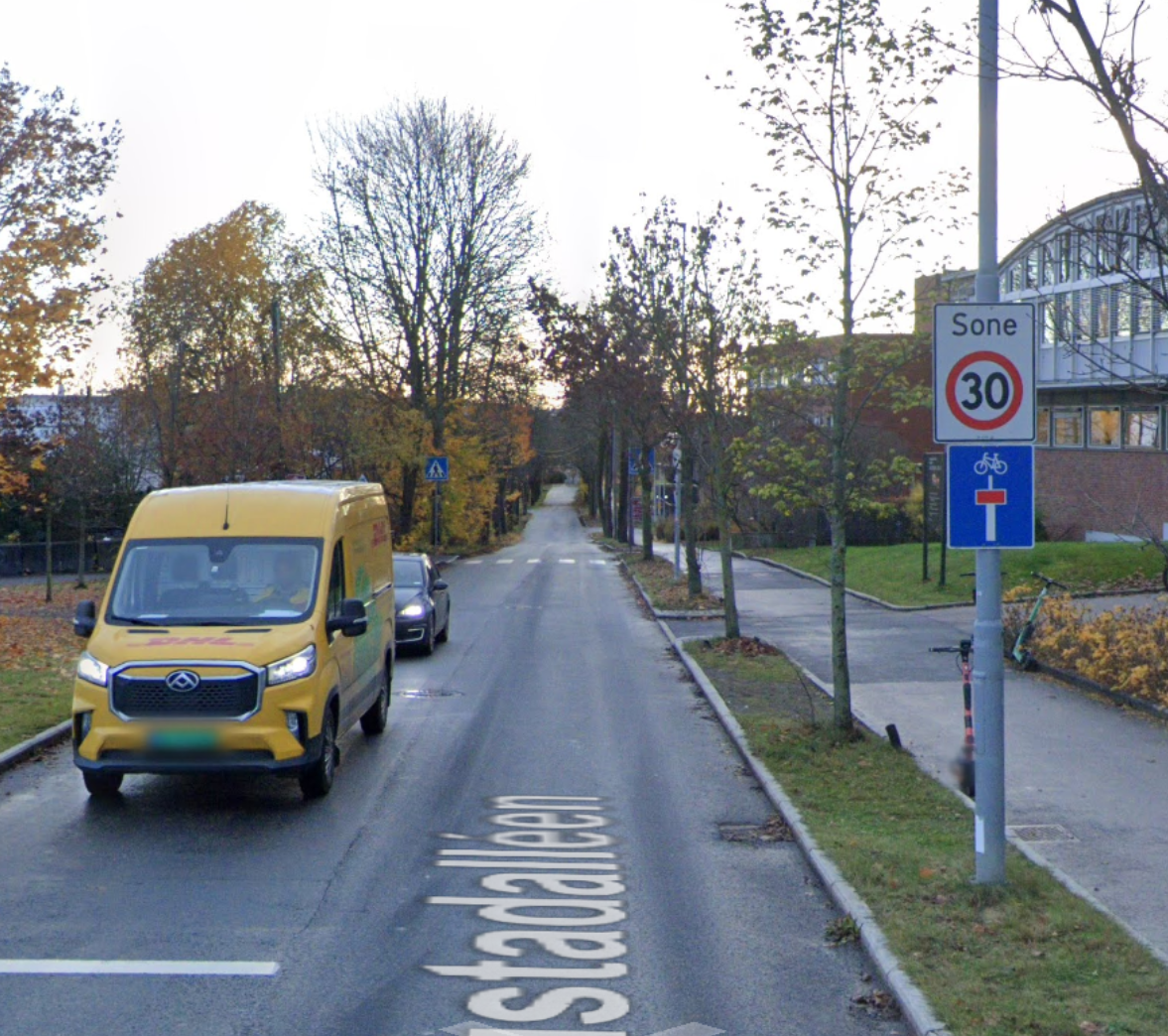
The sign is often used in:
- Residential areas – where the road ends for cars but continues as a cycle and pedestrian path.
- Recreational and outdoor areas – to prevent car traffic but allow vulnerable road users to continue.
- Industrial areas – roads that end for cars but remain open for cyclists and pedestrians.
Here is an example of the sign:
Frequently asked questions (FAQ) about the "Dead end - except cycles" sign
- Does the sign apply to wheelchairs? – Yes, wheelchair users are considered pedestrians and can pass if there is room.
- Can I continue cycling? – Yes, cycling is allowed until the cycle path eventually ends.