

Mandatory signs
What do mandatory signs look like?
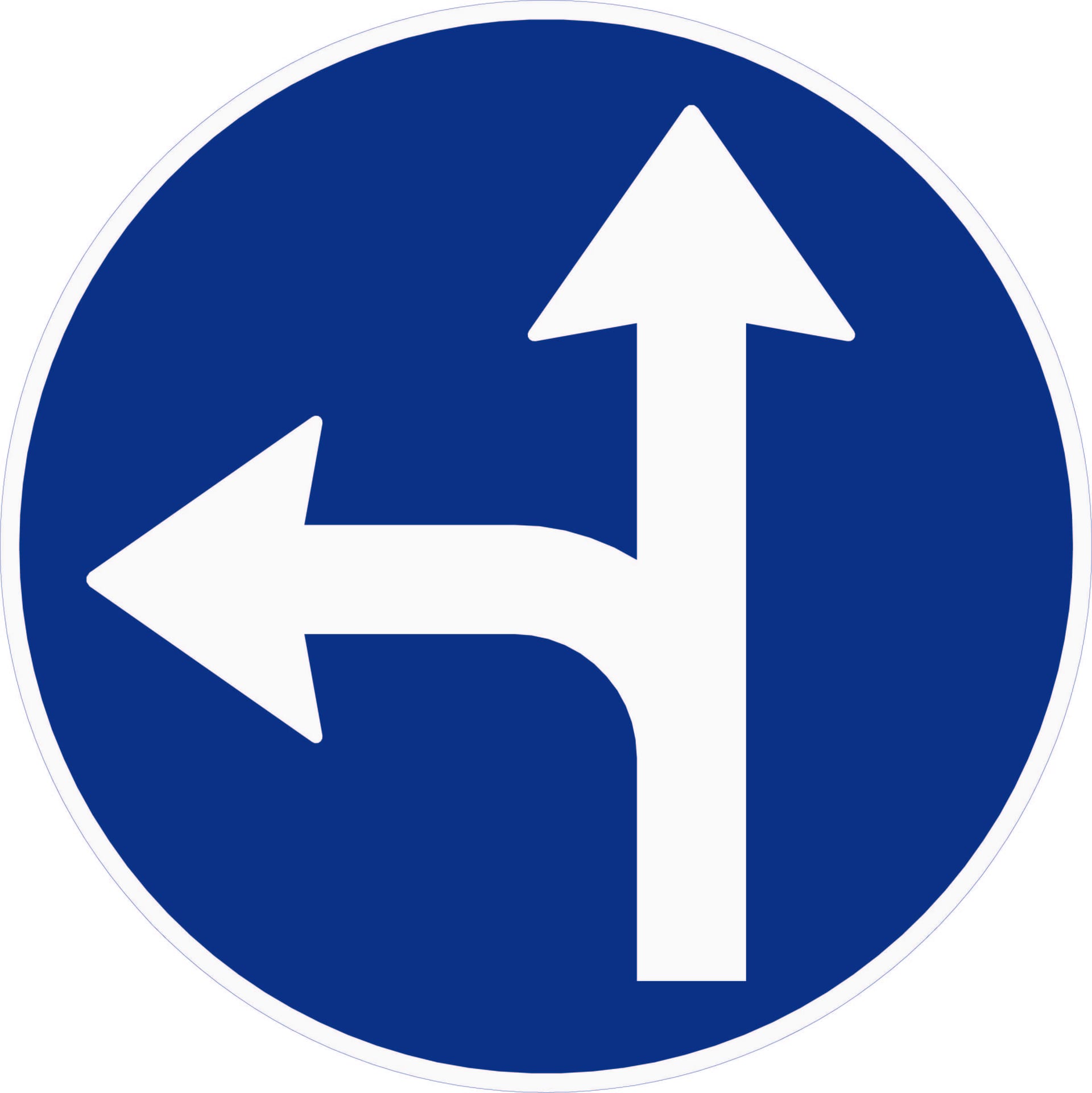
Compulsory direction of travel (straight ahead or left)
[object Object]
Is the compulsory direction of travel straight ahead or to the left sign important for the theory test and the driving test?
The compulsory direction of travel straight ahead or to the left sign is important both on the theory test and during the driving test. On the theory test you may get questions about what the sign means and where it is used. During the driving test you must show that you understand the sign and choose the correct direction of travel.
What does the compulsory direction of travel straight ahead or to the left sign mean?
The compulsory direction of travel straight ahead or to the left sign requires that from where it stands you may only drive straight ahead or turn left. Right turns and U-turns are not permitted.
When do you encounter the compulsory direction of travel straight ahead or to the left sign?
You often find the sign in situations such as:
- Intersections where right turns are prohibited to avoid collisions or congestion.
- City center areas with narrow streets that require controlled traffic flow.
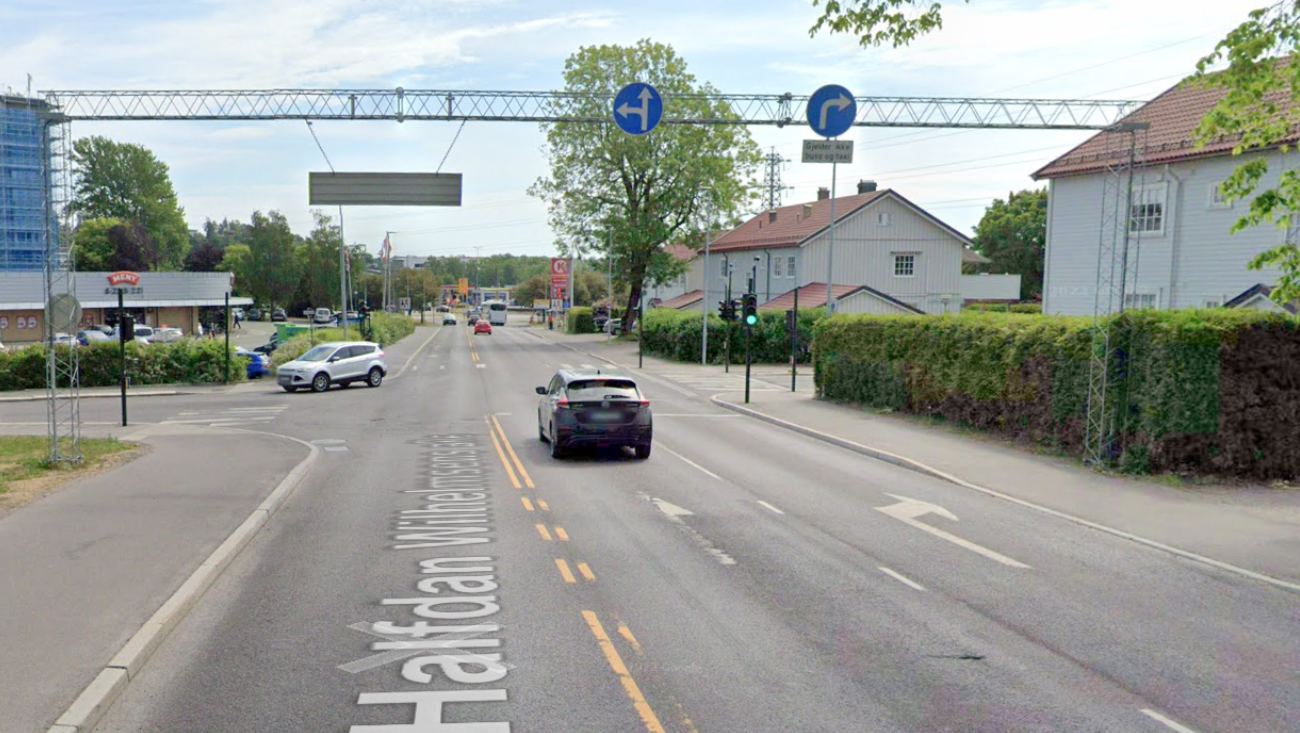
In the picture you see the compulsory direction of travel straight ahead or to the left sign placed right before an intersection in a specific lane. If you are driving in this lane you must choose one of the two permitted directions before you enter the intersection.
Tips before the driving test
Always look for signs well in advance of the intersection, choose the correct lane and signal your direction early so others know what you intend to do.
Frequently asked questions (FAQ) about the compulsory direction of travel straight ahead or to the left sign
- Can I turn right? No, the sign always applies regardless of traffic volume.
- Does the sign apply to cyclists? Yes, all drivers, including cyclists, must follow the sign unless a supplementary sign provides an exception.
- What happens if I break the requirement? You can get a fine, points on your driver's license and create dangerous situations.