
Mandatory signs
What do mandatory signs look like?
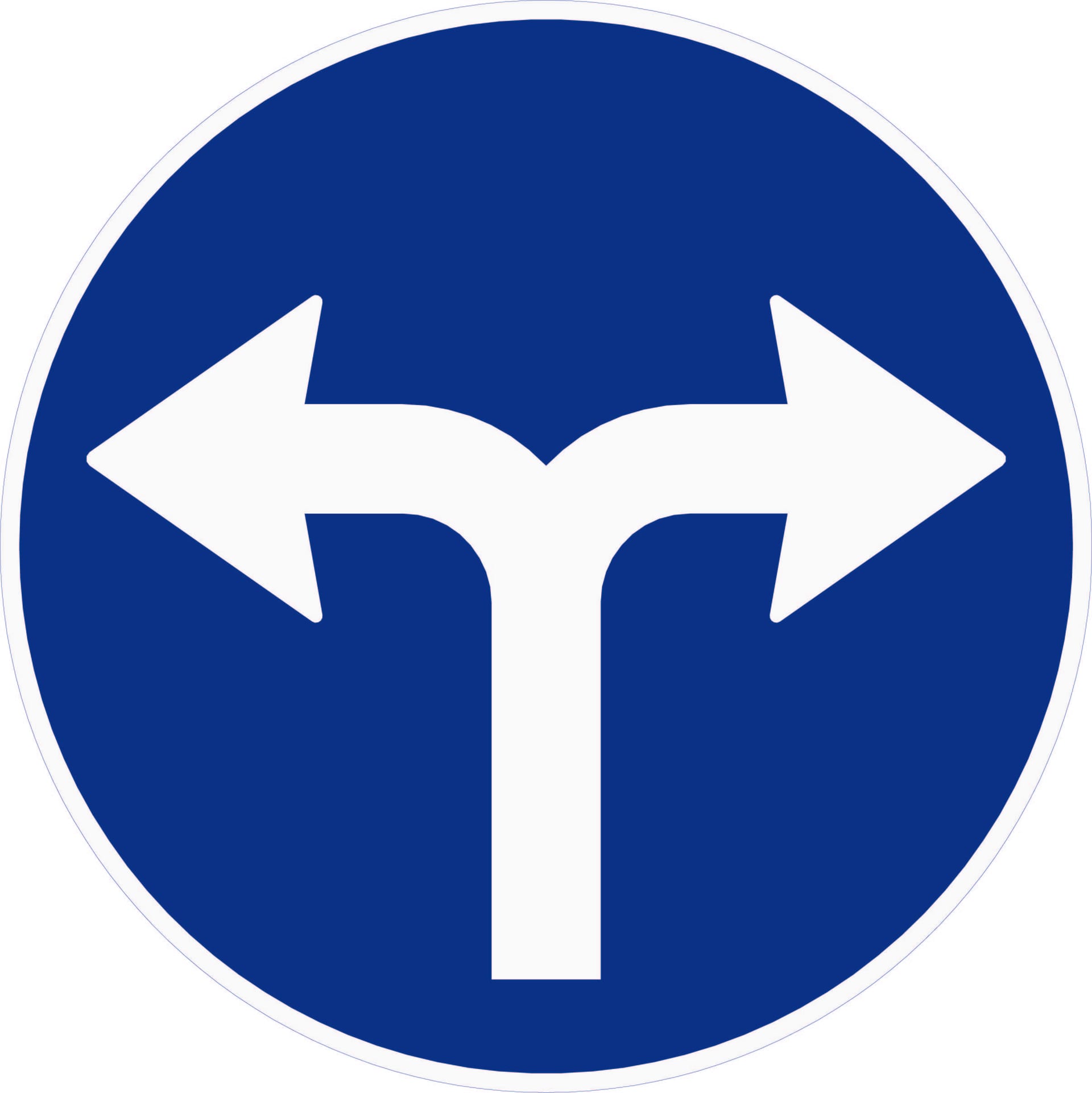
Compulsory direction of travel (right or left)
Compulsory direction of travel (right or left)
Is the Compulsory direction of travel (right or left) important for the theory test and the driving test?
Compulsory direction of travel (right or left) is important for both the theory test and the driving test. On the theory test they often ask about what the sign means and where it is used. During the driving test you must show that you recognize the sign and follow the requirement to turn right or left.
What is the Compulsory direction of travel (right or left)?
Compulsory direction of travel (right or left) shows that you can only turn right or left. Going straight ahead is not permitted. The sign has a blue background, white border and white arrows pointing right and left.
When do you encounter the Compulsory direction of travel (right or left)?
Compulsory direction of travel (right or left) is placed where you must choose between turning right or left at an intersection where going straight ahead is closed or prohibited. Common locations are:
- Intersections with closed through traffic where straight ahead is closed off with a barrier or construction.
- Intersections with multiple lanes where lanes are divided for right and left turns.
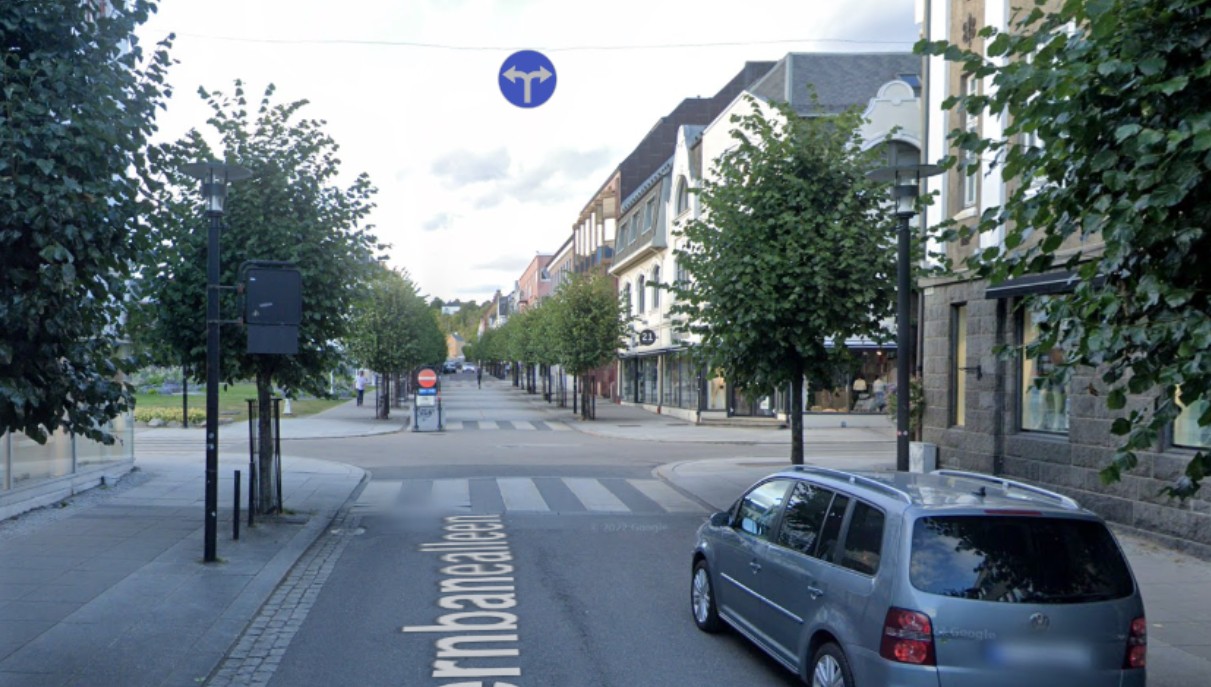
In the picture you see the Compulsory direction of travel (right or left) placed before an intersection where going straight ahead is prohibited. Traffic is directed either to the right or to the left.
What happens if you drive straight ahead past the Compulsory direction of travel (right or left)?
If you drive straight ahead where the Compulsory direction of travel (right or left) stands, you break a traffic rule. You can get a fine, points and create dangerous situations in traffic. Driving against a mandatory sign can also lead to a collision with other traffic coming from the opposite direction.
Why is the Compulsory direction of travel (right or left) important?
Compulsory direction of travel (right or left) contributes to orderly traffic flow by preventing cars from trying to drive straight ahead where it is not possible. The sign increases safety at intersections and reduces the risk of accidents.
Frequently asked questions (FAQ) about the Compulsory direction of travel (right or left)
- Does the sign apply to cyclists? Yes, the Compulsory direction of travel (right or left) applies to all road users, including cyclists and moped riders, unless a supplementary sign provides an exception.