

Direction signs
What do direction signs look like?
Direction signs are square and can have several background colours, including blue, yellow, white, orange and brown. There are exceptions to this rule of thumb. Direction signs provide information about place names, services, routes, lane choices, road choices and the distance to destinations.
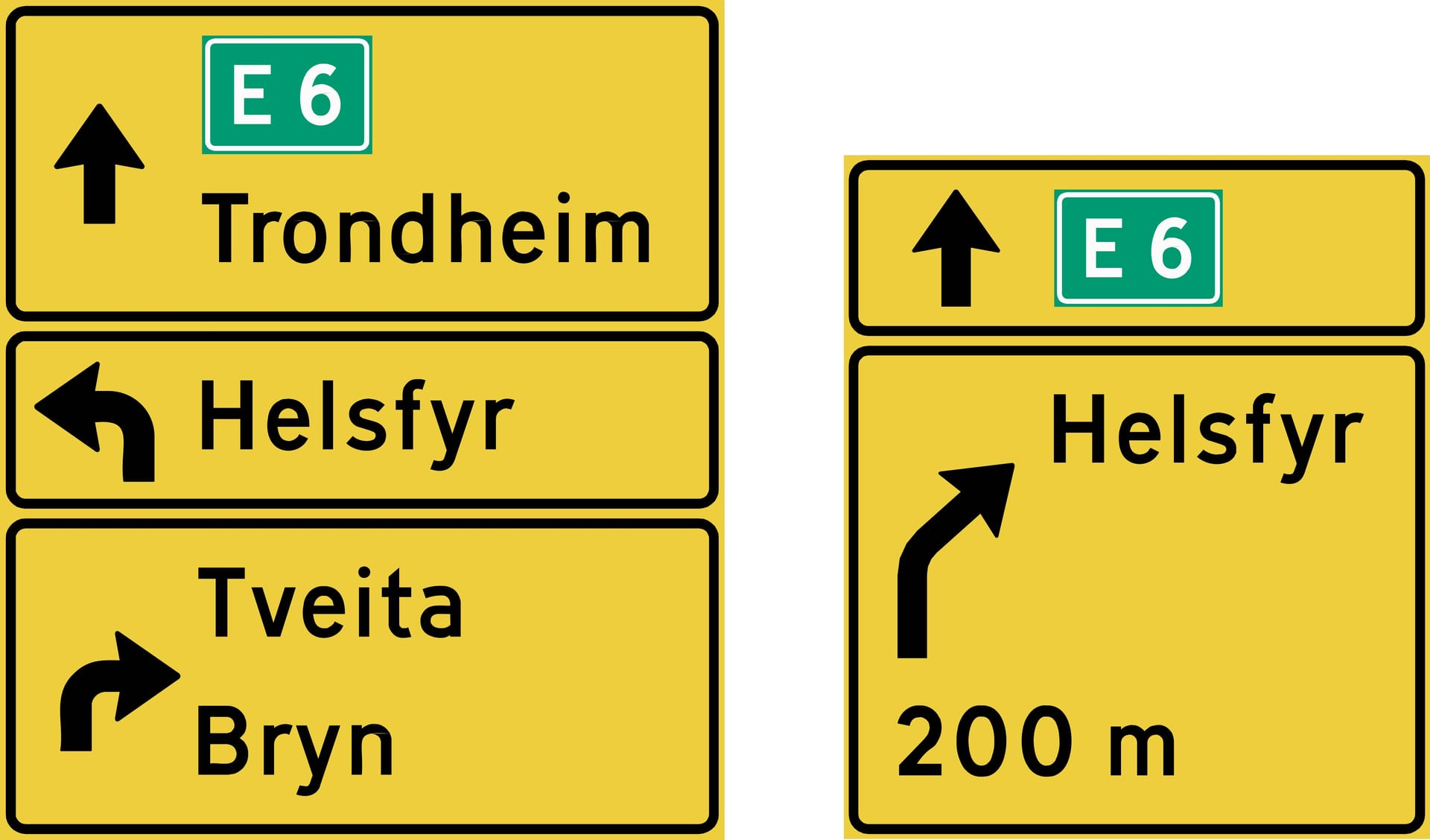
Tabular advance direction sign
Tabular advance direction sign
[object Object]
Is the tabular advance direction sign important for the theory test and the driving test?
Yes. On the theory test for class B you have to know the difference between advance direction signs that warn you in time. During the driving test you must show that you understand the arrows and place names, choose the correct lane and make a safe route choice well before the junction.
What is the tabular advance direction sign?
The tabular advance direction sign is a direction sign that arranges arrows in a table above place names or routes. Each column tells you which way leads to the listed destinations, so you can plan your lane choice and turn before you reach the junction itself.
When do you encounter the tabular advance direction sign?
You typically see the tabular advance direction sign:
- Outside built-up areas, on road sections with a speed limit of 60–80 km/h, where the junction has multiple options.
- Occasionally in 50 km/h zones at complex junctions or where visibility is poor, so unfamiliar drivers have plenty of time to orient themselves.
- Before collector roads and main roads where it is important to pick the right lane early.
Tips for using the tabular advance direction sign
- Note the road number or symbols in front of place names for more information.
- Position yourself in the correct lane early – avoid sudden lane changes at the last second.
Frequently asked questions about the tabular advance direction sign
- How far before the junction is the sign placed? – Usually 100–200 m in 60–70 km/h zones, and 150–250 m in 80 km/h zones, so you have time to read and react.
- Does the sign apply to cyclists and pedestrians? – It is aimed mainly at motorists, but also cyclists who follow the road. Pedestrians usually use their own direction signs.
- What do I do if I'm unsure of the direction? – Reduce your speed, check your mirrors and choose the correct lane, or drive past the junction and find a new route.