

Direction signs
What do direction signs look like?
Direction signs are square and can have several background colours, including blue, yellow, white, orange and brown. There are exceptions to this rule of thumb. Direction signs provide information about place names, services, routes, lane choices, road choices and the distance to destinations.
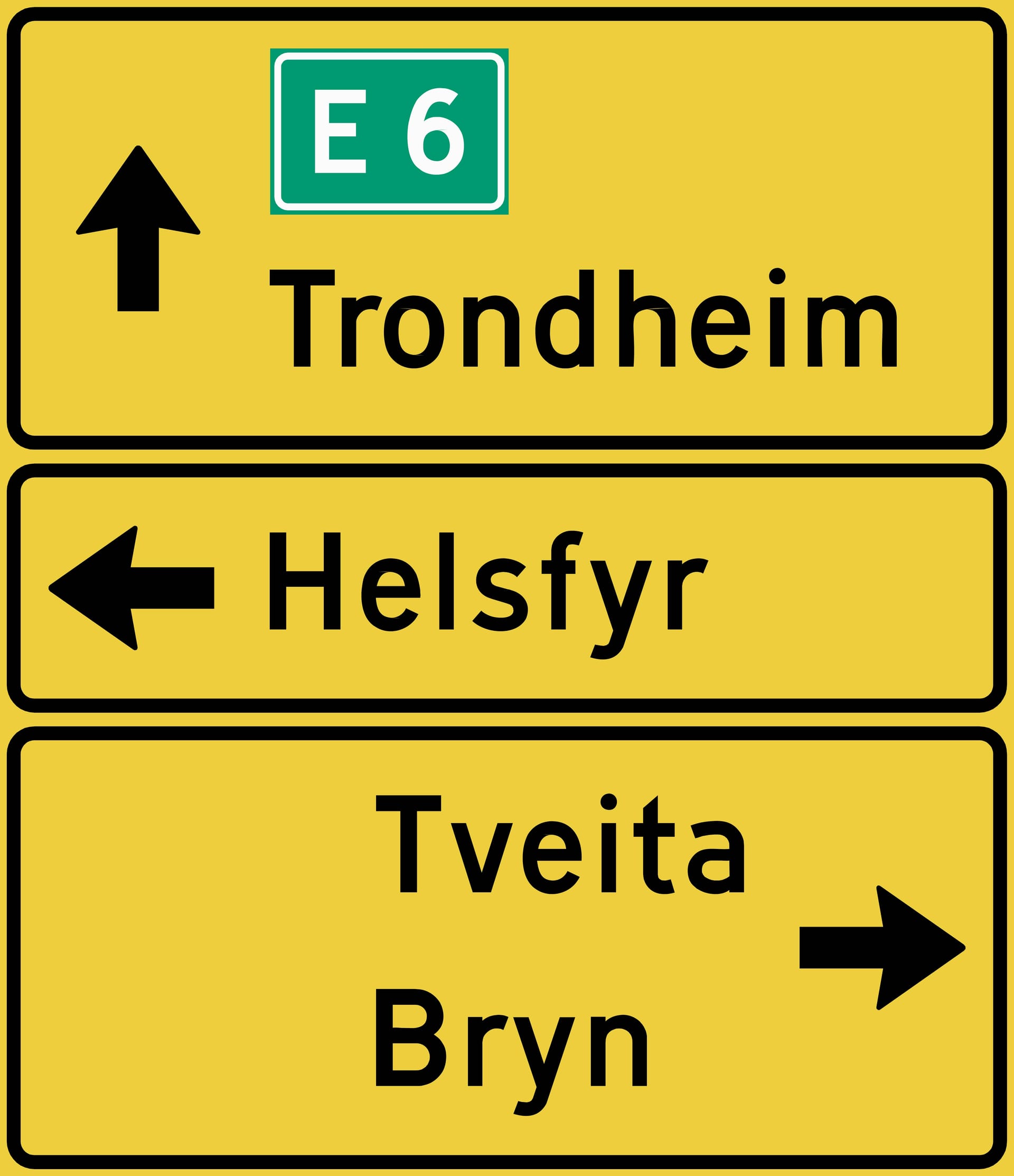
Tabular direction sign
Tabular direction sign
[object Object]
Is the tabular direction sign important for the theory test and the driving test?
The tabular direction sign is part of the syllabus for both the theory test and the driving test. On the theory test you may be asked how to follow the signs to choose the correct lane or road at junctions. On the driving test you must show that you understand the layout, plan your positioning in advance and avoid last-second lane changes.
When do you encounter the tabular direction sign?
You see the tabular direction sign in situations such as:
- Larger road junctions or roundabouts with multiple exits.
- When there are many destinations and a simple arrow sign (ordinary direction sign) does not give enough overview.
- On national and important county roads with high traffic volumes and multiple junctions.
Why use the tabular direction sign?
The tabular direction sign improves road safety by giving clear, early information about which lanes and road arms to choose. You have more time to position yourself in the correct lane, reduce speed and avoid stress and dangerous last-second lane changes.
Tips for reading the tabular direction sign
- Look at the arrow direction first before choosing a lane.
- Note any symbols and different background colors (for example for motorways) that distinguish special routes.
Frequently asked questions (FAQ) about the tabular direction sign
- Can I fully rely on the tabular direction sign? – Yes. The signs are designed for continuity and readability, so unfamiliar drivers always get the information they need to reach their destination.
- Is the tabular direction sign the same throughout the country? – The design is standardized nationally, but place names and road numbers may vary according to local signing plans.