

Direction signs
What do direction signs look like?
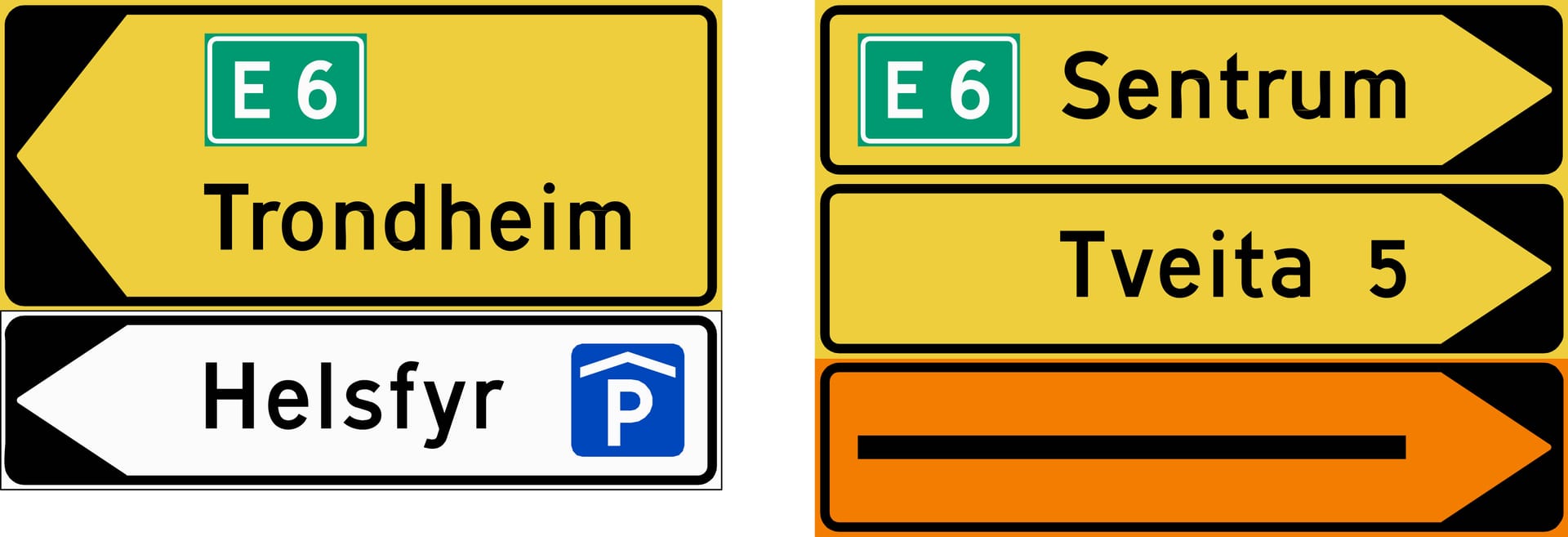
Standard direction sign
[object Object]
Is the ordinary direction sign important for the class B theory test and the driving test?
Direction signs (including sign 713) are part of the syllabus for the class B theory test, because you must be able to recognize and interpret all signs that indicate the direction of travel. On the practical driving test you must show that you follow the signs correctly to navigate safely and accurately through the road network.
What is the ordinary direction sign?
The ordinary direction sign (sign 713) gives simple, direct guidance at junctions and exits by pointing toward the recommended direction. The sign shows the destination(s), and optionally distances and symbols, with clear contrast between text and background in line with current standards.
When do you encounter the ordinary direction sign?
You often find the ordinary direction sign at:
- Simple junctions – when large advance direction signs are not needed.
- Exits – just before you leave the main road.
- Roundabouts – as confirmation of which exit to take.
What happens if you miss the ordinary direction sign?
If you miss the ordinary direction sign you can end up on the wrong road, have to turn around, or take detours.
Why is the ordinary direction sign important?
The ordinary direction sign helps both locals and visitors find the correct route without consulting a map while driving. It improves road safety, reduces congestion and prevents accidents by giving clear, consistent guidance at all types of junctions.
Frequently asked questions (FAQ) about the ordinary direction sign
- Can the ordinary direction sign show more than one destination? – Yes, it can show up to two destinations on the same sign, but the number should be kept low to keep it readable.
- Does the ordinary direction sign apply to all road users? – Yes, drivers, motorcyclists, truck drivers and other drivers can follow it.