

Direction signs
What do direction signs look like?
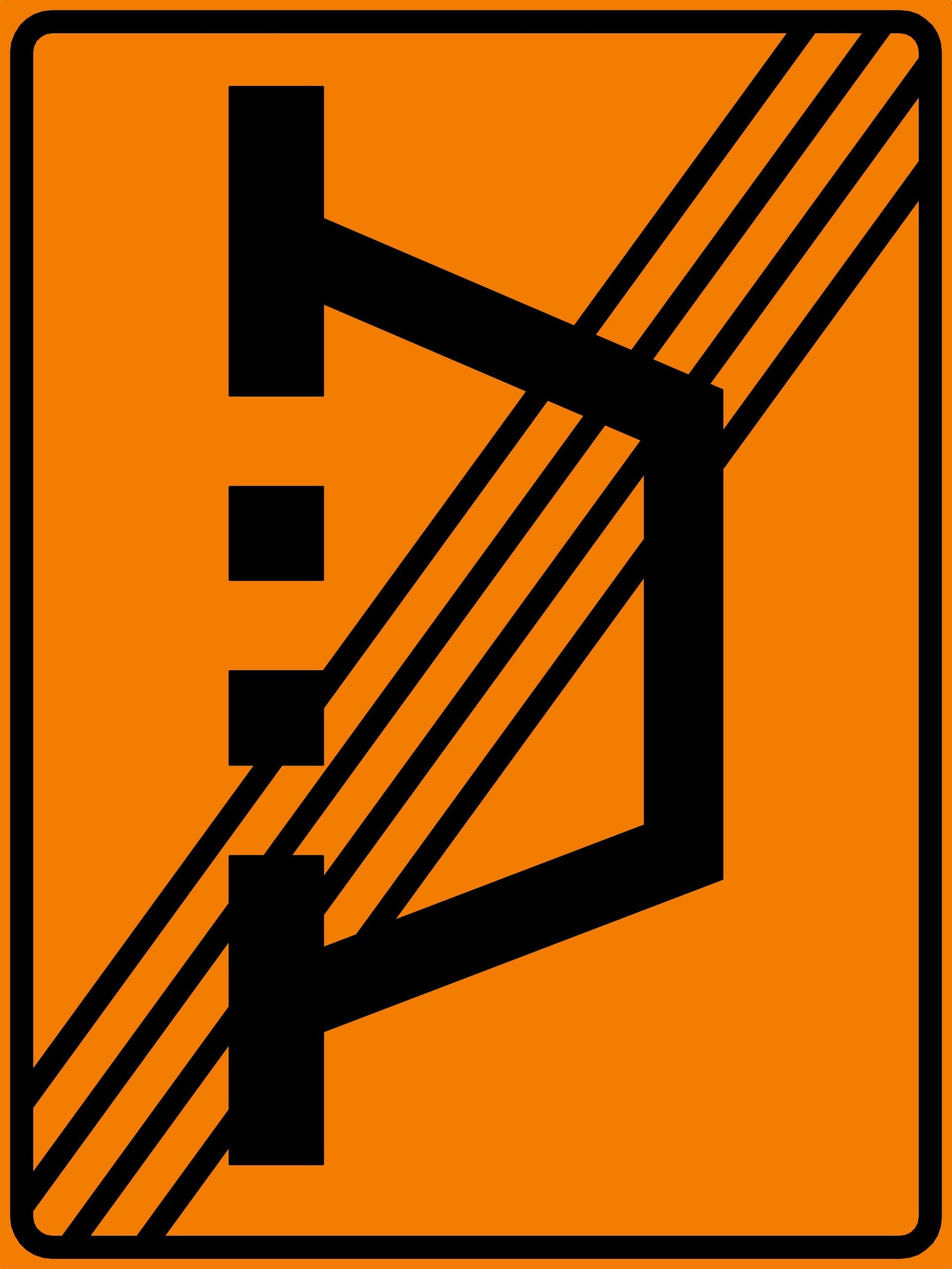
End of temporary detour
[object Object]
Is the end of temporary detour sign important for the theory test and driving test?
No, this sign is not among the most central signs you need to know for the theory test or driving test. It is relatively rare to encounter, but it is useful to know what it means so that you can continue correctly when a temporary detour route ends.
What does the end of temporary detour sign mean?
The end of temporary detour sign tells you that the temporary detour road is over and that you are back on the main road. After the sign, the normal traffic rules and direction signs apply again.
When do you encounter the end of temporary detour sign?
You encounter the sign after you have followed a temporary detour route around road works or a closed road section. The sign is placed 50–100 m after the end of the detour, and at least 50 m from other traffic signs.
What must you do when you see the sign?
When you see the end of temporary detour sign, you should continue on the main road and follow the normal signing.
How do you remember the end of temporary detour sign?
The sign has an orange background (temporary) and slanted black lines pointing toward the main road. Think "orange = temporary" and "diagonal lines = end".
Frequently asked questions (FAQ) about the end of temporary detour sign
- Can the sign be placed close to an intersection? – No, it must stand at least 50 m from other signs and 50–100 m after the end of the detour road.