

Direction signs
What do direction signs look like?
Direction signs are square and can have several background colours, including blue, yellow, white, orange and brown. There are exceptions to this rule of thumb. Direction signs provide information about place names, services, routes, lane choices, road choices and the distance to destinations.
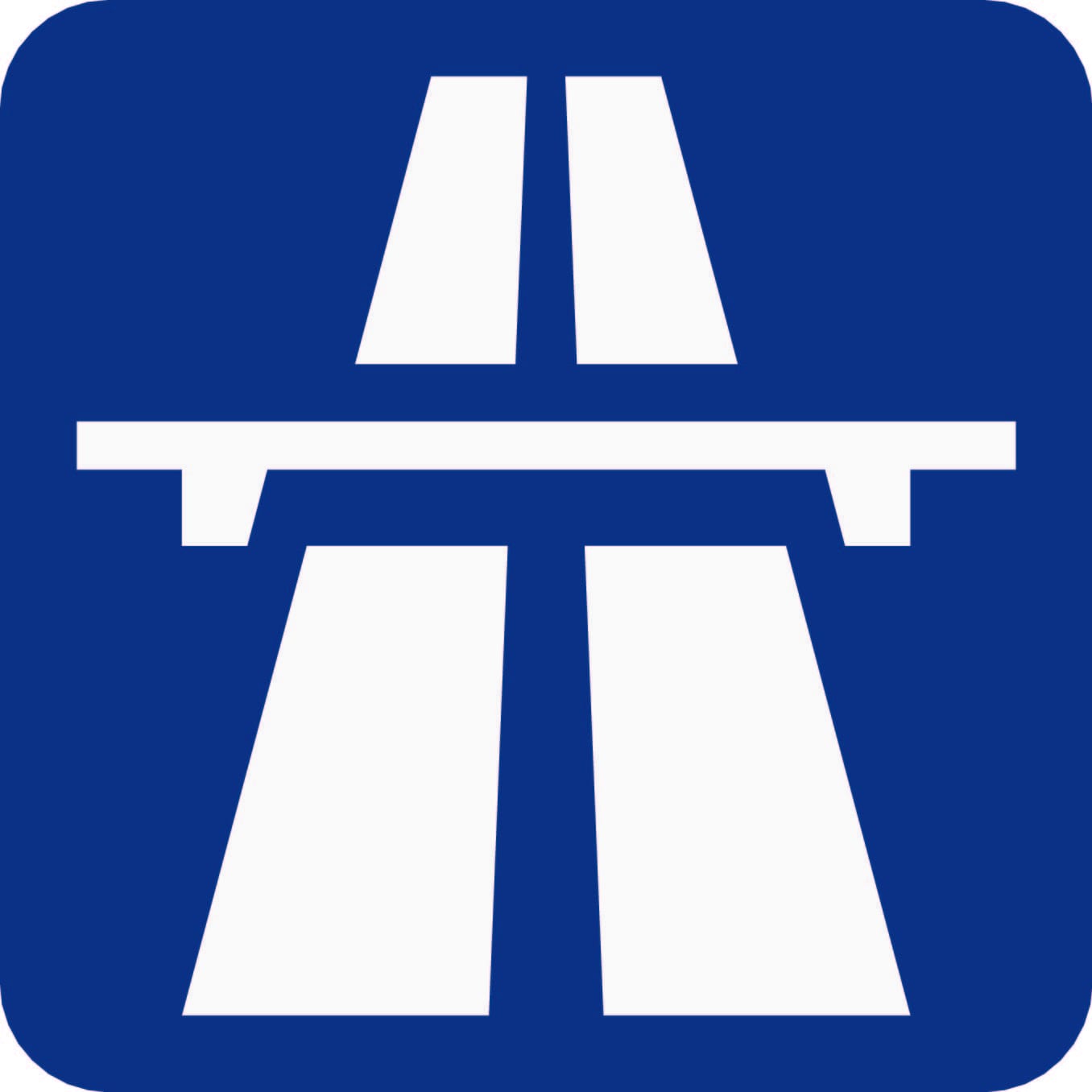
Motorway (direction sign)
Direction sign to motorway
[object Object]
Is the motorway sign important for the theory test and driving test?
This sign is part of the theory test syllabus, and you should be able to recognize it and know its main meaning. It is usually less central during the driving test, but it is still useful to understand how it can affect the traffic situation and your driving.
What is the motorway sign?
The motorway sign is part of the direction sign system. The symbol indicates that the route you are following enters a motorway – a road with physically separated directions of travel, at least two lanes in each direction, and no at-grade intersections.
When do you encounter the motorway sign?
You will see the motorway sign in situations such as:
- On advance direction signs at the junction just before entering the motorway.
- On direction signs immediately before you enter the acceleration lane onto the motorway.
- On confirmation signs just after you have entered the motorway.
Frequently asked questions (FAQ) about the motorway sign
- Can all motor vehicles drive on a motorway? – Yes, as long as they are approved for public roads and can maintain at least 40 km/h.
- What is the difference between the motorway sign and the expressway sign? – The motorway sign indicates roads without at-grade intersections and at least two lanes in each direction. Expressways follow similar rules, but may have fewer lanes or climbing lanes.
- How do you prepare for entering a motorway? – Practice proper use of the acceleration lane, mirrors, and blind spots before merging onto the motorway.