

Prohibition signs
What do prohibition signs look like?
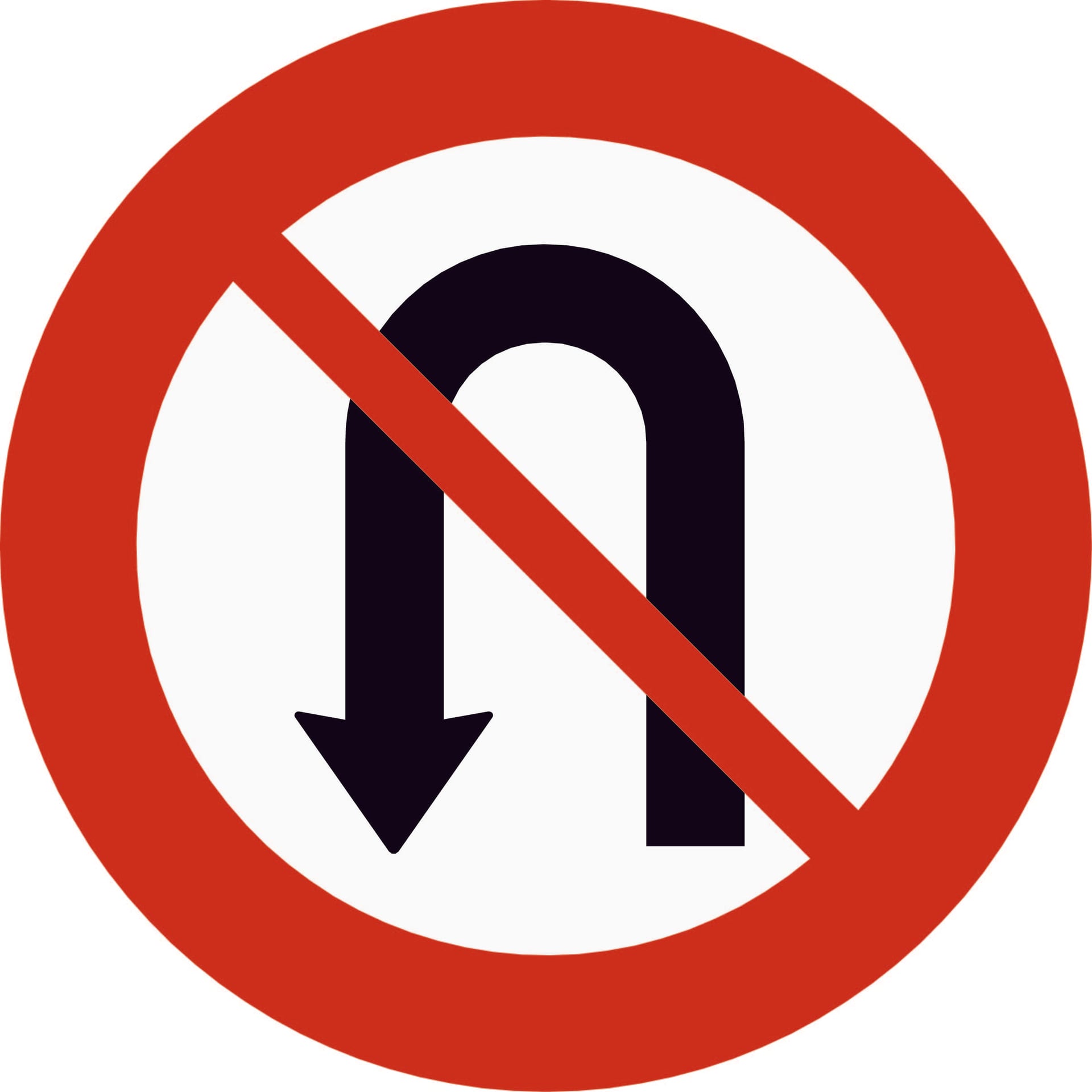
No U-turn
No U-turn
Is the no U-turn sign important for the theory test and the practical driving test?
Yes, the no U-turn sign is important for the theory test and the practical driving test. It is important to understand where and why this sign is used, as well as the consequences of breaking the prohibition.
What does the no U-turn sign mean?
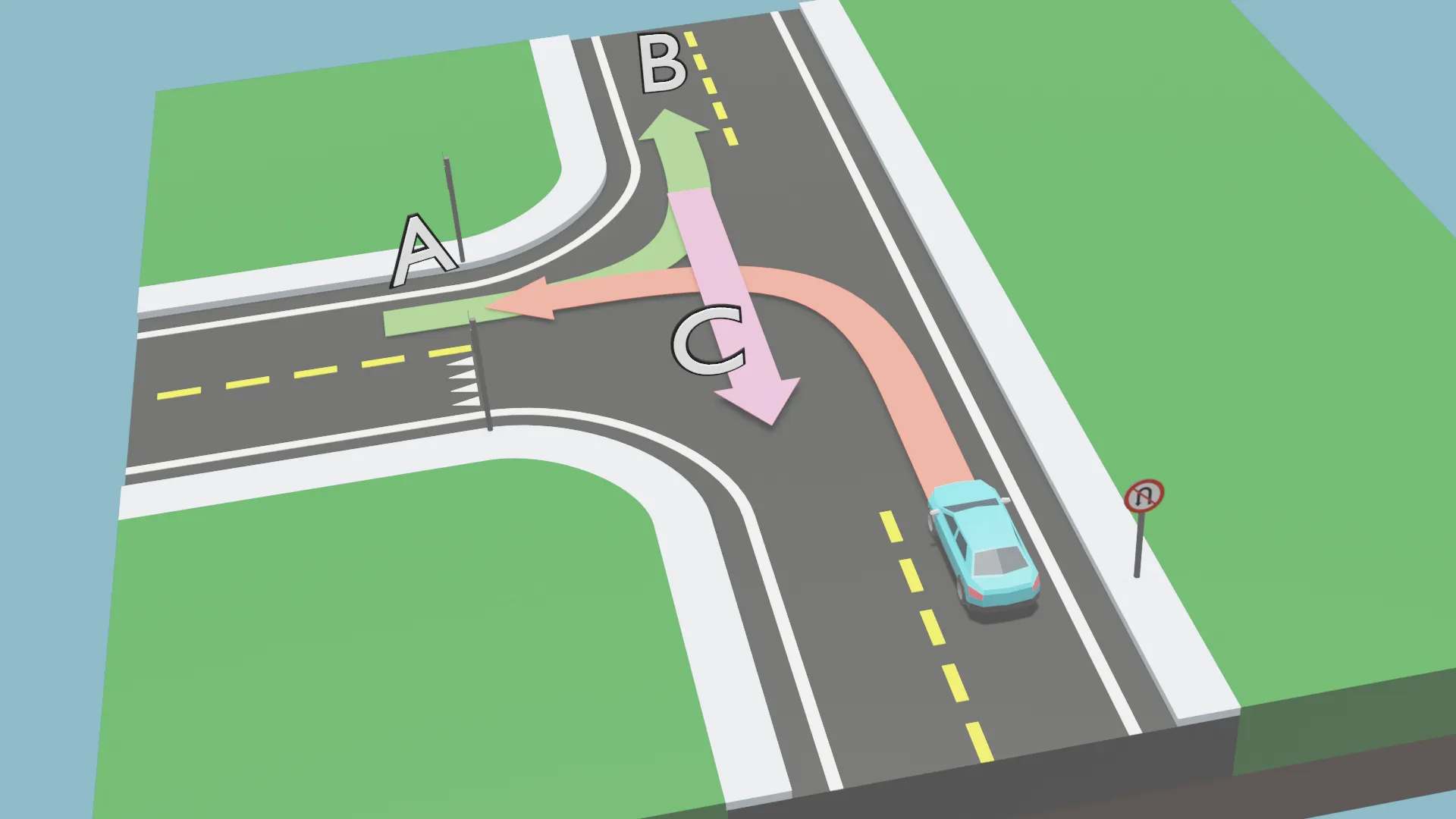
The no U-turn sign means that you are not allowed to turn around or make a U-turn where the sign is placed. It applies to all ways of turning the car around, not just U-turns. For example, it is also not allowed to turn into a road, reverse out into the intersection, and then drive back the way you came – this is also considered turning around. The sign is round, white with a red border, and shows a black arrow making a U-turn with a red line over it. It is used in places where turning around can be dangerous or create traffic problems, and it is made to prevent accidents and dangerous situations in traffic.
Example of a maneuver that is not permitted
Where do you find the no U-turn sign?
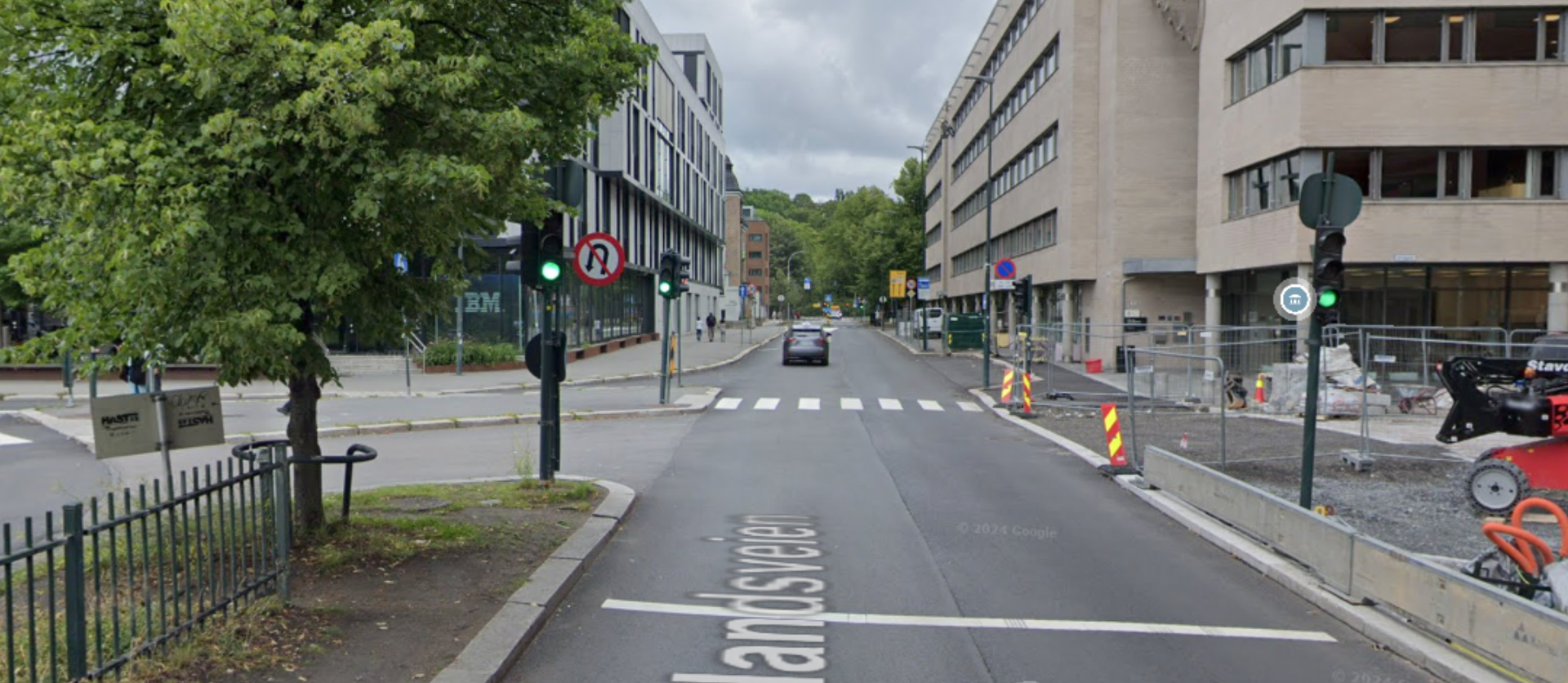
This sign is often used in places where turning around can create traffic danger or disrupt the traffic flow, for example:
- Busy intersections – where turning around can lead to dangerous situations.
- Tunnels and bridges – where there is no space or possibility to turn around safely.
- Streets with heavy traffic – to avoid traffic standstills or collisions.
What happens if you make a U-turn maneuver?
If you turn around or make a U-turn where U-turns are forbidden, you can get a fine of 8,200 NOK. In the worst case, it can lead to traffic accidents.
Why is this sign important?
The sign is important to maintain safety and flow in traffic. By preventing turning around in unsuitable places, the risk of accidents and traffic congestion is reduced.