

Direction signs
What do direction signs look like?
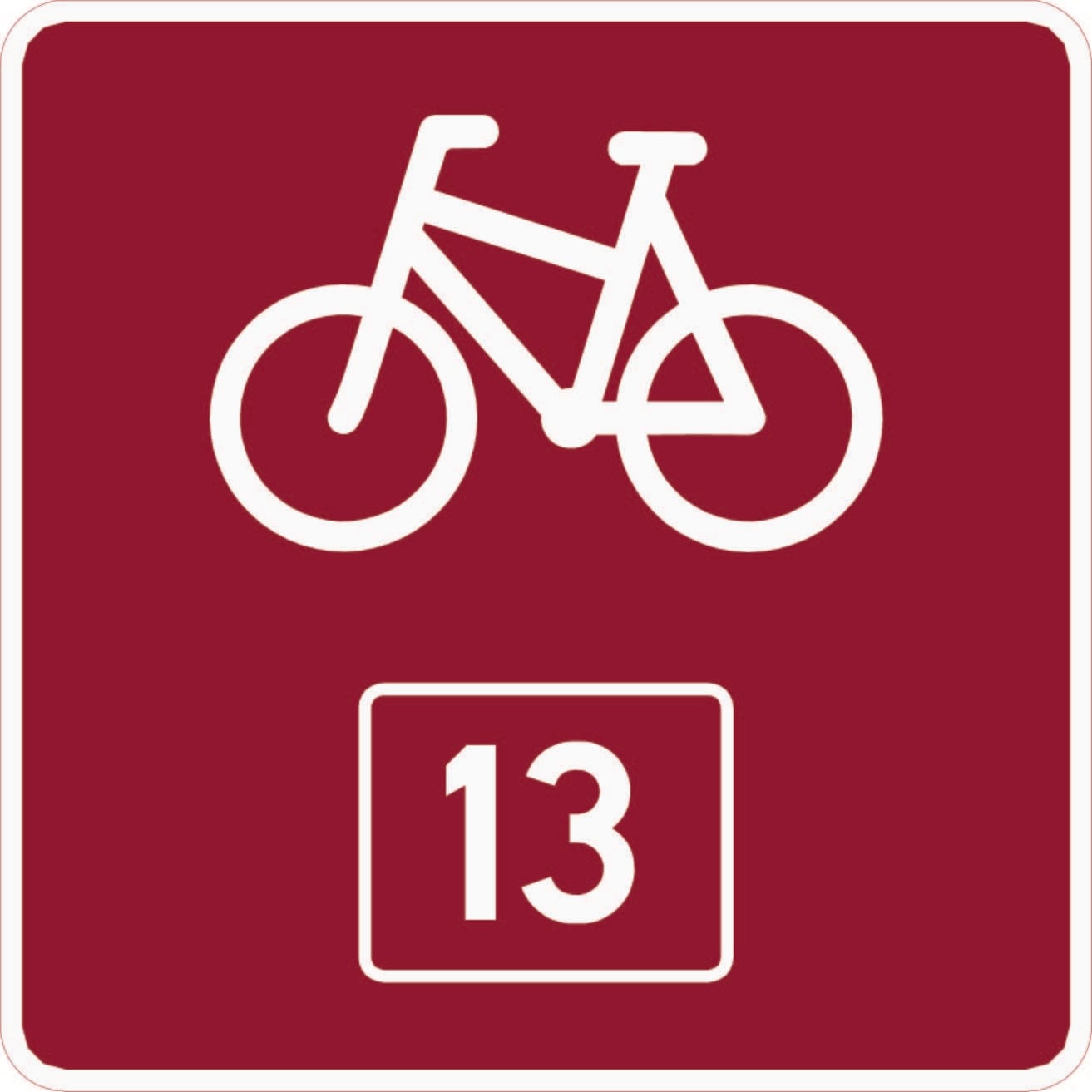
Cycle route sign
[object Object]
Is the bicycle route sign important for the theory test and driving test?
The bicycle route sign is not among the most central signs for the driving test, but it is part of the theory test syllabus. You should be able to recognize it and know that it marks a bicycle route, but you do not need to study details in depth.
What is the bicycle route sign?
The bicycle route sign marks the start and confirms the alignment of a bicycle route. It guides cyclists on which route to follow, but does not regulate motor traffic directly. The sign may show a route number or route name below the symbol.
When do you encounter the bicycle route sign?
You can see the bicycle route sign in places such as:
- Urban streets with bicycle paths – where the municipality has established a cyclist-friendly route.
- Trails or parks – where there are marked routes for recreational cycling.
- Detour routes for cyclists – to guide cyclists around road works or dangerous sections.
How does the bicycle route sign affect motor traffic?
Drivers must be aware that cyclists may follow this route. Although the bicycle route sign does not impose any specific prohibitions, you should show consideration, keep a good distance, and avoid parking in the bicycle alignment.
Why is the bicycle route sign important?
The bicycle route sign promotes safe cycling by guiding cyclists onto defined, planned routes. It reduces conflicts between drivers and cyclists and contributes to better traffic flow.
Frequently asked questions (FAQ) about the bicycle route sign
- Does the bicycle route sign apply only to cyclists? – Yes, the sign is a route marker for cyclists, but pedestrians can also use it for orientation in recreational areas.